
Coming home from the hospital is a relief, but the days right after a stay are also one of the more vulnerable times in an older adult’s year. Strength fades quickly during time in a hospital bed, medications are often changed, and a familiar home can suddenly hold new risks. A little preparation makes the difference between a smooth recovery and a setback.
This guide is a practical checklist for that transition, written for the person coming home and for the family helping them. It covers what to ask before discharge, how to make the home safer, what the first 72 hours look like, and how a medical alert system from Bedford Medical Alert® can add a layer of security while strength returns. None of it is medical advice. It is the kind of plain, organized preparation that lets everyone breathe a little easier.
Coming home from a specific Toronto hospital network? Our Unity Health Toronto discharge resource covers going home from St. Michael’s, St. Joseph’s and Providence.
Two things that happen during a hospital stay raise the risk of a fall afterward. The body loses conditioning quickly, sometimes noticeably within a few days of bed rest, and medications are often added or adjusted, which can affect balance, blood pressure, and alertness. Put together, a person can arrive home less steady than they were before they went in.
The evidence backs this up. Falls are the leading cause of injury-related hospitalization among Canadian seniors, according to the Public Health Agency of Canada. The risk is also concentrated right after discharge. A 2025 cohort study of more than 700,000 older adults, published in the journal Scientific Reports, found that the chance of a fall at home is highest in the very first week after leaving acute care, far higher than it is a few months later. The recovery window strains the wider system too: the Canadian Institute for Health Information reports that unplanned readmissions affect close to 200,000 Canadians each year. The point is not to cause alarm. It is that the first days and weeks home deserve a plan.
The best recovery preparation starts before you walk out the hospital doors. Discharge can feel rushed, so it helps to arrive at that conversation with a short list. Ask the discharge planner or nurse to walk through each of these:
Having these answers in hand removes most of the guesswork that makes the first week stressful.
A few small changes clear the most common hazards, and a family member can often do a quick walk-through before the patient arrives. Move through the home one room at a time:
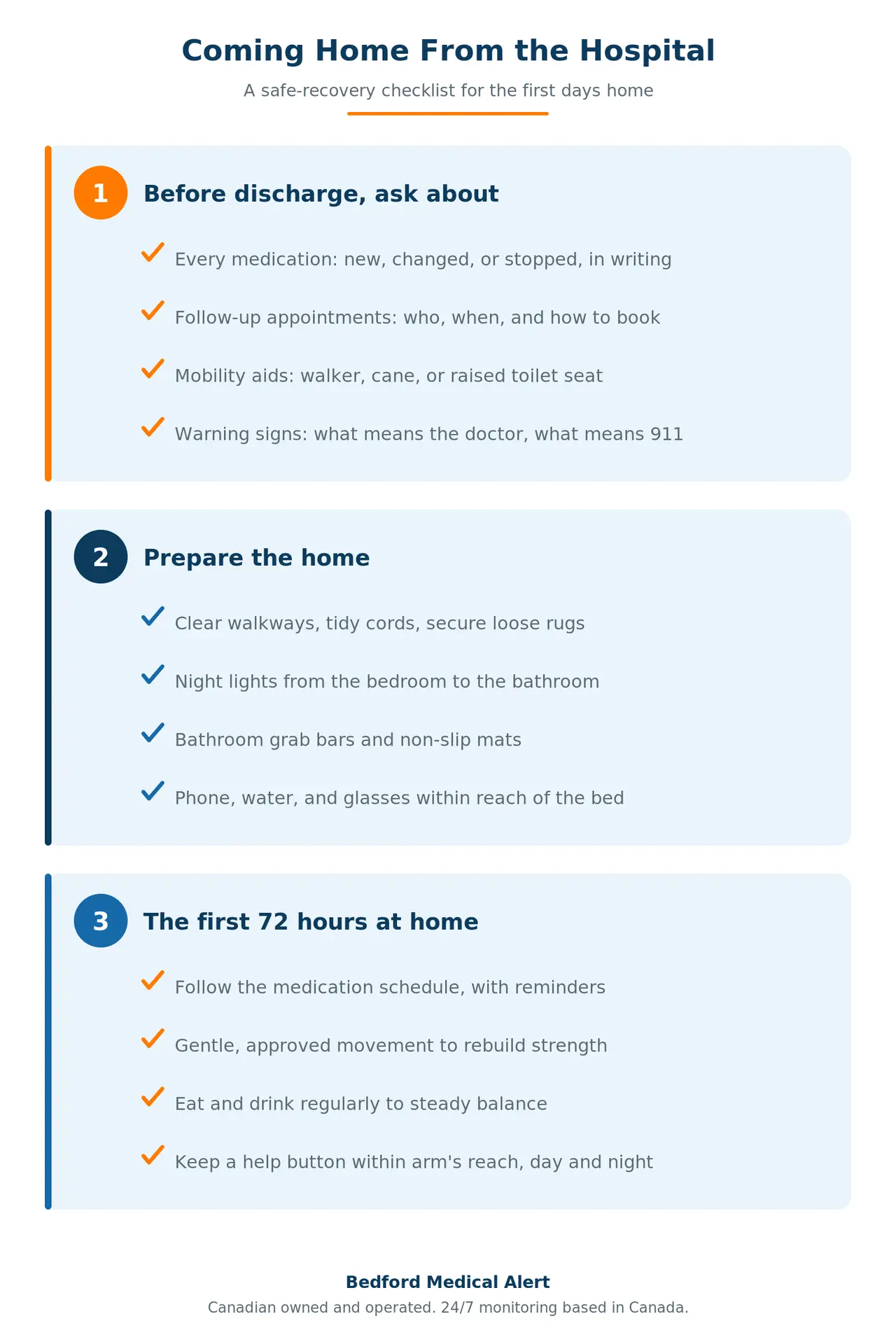
The first three days set the tone, so keep them calm and simple. Follow the new medication schedule closely, using a pill organizer or phone reminders so nothing is missed or doubled. Rest, but do not stay completely still: gentle movement that the care team has approved helps rebuild the strength that bed rest took away. Keep water and easy food within reach, since dehydration and skipped meals make dizziness worse.
Above all, keep a way to call for help within arm’s reach at all times, including in the bathroom and overnight. A phone left across the room is no help during a fall. This is the single most important habit of the first few days, and it is exactly where a wearable help button earns its place.
Bringing a parent home and not sure what they need? Speak with a Canadian care consultant who can help you match a device to the recovery ahead, with no obligation. Call 1-888-755-3055 and we will walk through it with you.
During the weeks when strength is still returning, a medical alert system gives the person at home a simple, reliable way to summon help, and it gives the family some peace of mind. One press connects to a monitoring centre through a two-way speaker, so help can be reached even when the person cannot get to a phone. Bedford operators follow a personalized response plan for each household, so the contacts, medical details, and wishes you set up are what guide the response.
For someone recovering at home, the in-home Home Freedom system is often the natural fit, with a help button worn as a pendant or wristband and a base unit that covers the home. If falls are a particular worry after discharge, some devices add automatic fall detection. In general terms, this technology uses motion sensors to recognize patterns that may indicate a fall and can start a response on its own, though no device detects every fall or guarantees an outcome. You can read how that works in our guide to how automatic fall detection works, and if you are weighing the options, our walkthrough of which medical alert device is right for you helps narrow it down. Families often choose Bedford for the response behind the button, which you can read about on our why families choose Bedford page.
Recovery is rarely a straight line, so it helps to keep a light eye on how things are going. Use the warning-sign list from the discharge team as your guide, and do not hesitate to call the doctor’s office with questions between appointments. Keeping follow-up appointments, finishing prescribed courses of medication, and staying with any physiotherapy plan all lower the chance of a return trip to the hospital. For a closer look at that vulnerable first stretch at home, see our piece on where a medical alert fits after a hospital stay.
When the person coming home lives by themselves, the worry is sharper and the plan matters more. If you cannot be there for the first stretch, line up a rotation of family, friends, or a paid caregiver for the early days, and check in by phone at set times. Raising the idea of a medical alert device can be delicate, since many older adults hear it as a loss of independence. It usually lands better framed as the opposite: a tool that lets them stay in their own home with confidence, rather than one that signals decline. Easy Setup means the device is ready quickly, the equipment is included with the subscription, and there is no long-term contract to manage during an already busy time.
Coming home should feel like the start of getting better, not a new source of anxiety. A short list of questions before discharge, a quick pass to make the home safer, a careful first 72 hours, and a dependable way to call for help cover the large majority of what goes wrong in early recovery. Bedford Medical Alert is Canadian-owned and operated, provides 24/7 monitoring based in Canada, is recommended by doctors and hospitals, and holds a 4.9-star Google rating from families across the country. That combination is built for exactly this moment: helping someone recover safely, at home, on their own terms.
Setting up safety before a loved one comes home from the hospital? The in-home Home Freedom system puts a help button within reach and a Canadian monitoring team on call 24/7, with equipment included and no long-term contract. Call 1-888-755-3055 and we will help you get it ready.
Tell us a little about your situation and a Bedford specialist will call you back, usually the same day. No pressure, no obligation.