Every 20 seconds, a Canadian senior visits an emergency room because of a fall. That’s more than 4,300 fall-related ER visits every single day – making falls the leading cause of injury-related hospitalization for adults over 65 in this country.
Here’s what makes this especially frustrating: most of those falls were preventable. Not with expensive gadgets or complicated programs, but with a handful of well-researched changes to the home environment and daily habits.
The challenge is that there’s a lot of noise out there – products marketed as fall prevention solutions that don’t have much evidence behind them, and genuinely effective strategies that don’t get nearly enough attention. This guide cuts through both.
Why Falls Happen: The Real Causes
Before you can prevent falls, it helps to understand what actually causes them. Falls are rarely just “accidents.” They typically happen when multiple risk factors collide at once.
The most common contributing factors include:
- Muscle weakness and poor balance – the single biggest modifiable risk factor
- Medication side effects – dizziness, low blood pressure, and sedation affect many common prescriptions
- Vision problems – depth perception and contrast sensitivity decline with age
- Home hazards – loose rugs, poor lighting, and no grab bars
- Footwear – slippers and socks without grip are a common culprit
- Rushing – particularly when getting up from bed or the toilet
- Chronic conditions – arthritis, Parkinson’s, and heart conditions all increase risk
Understanding this matters because the best fall prevention strategies target the specific risks that apply to your loved one, rather than using a one-size-fits-all approach.
What Actually Works: Evidence-Based Strategies
1. Exercise – Especially Balance and Strength Training
This is the single most effective intervention for fall prevention, and it’s consistently supported by research. Specifically, programs that include balance training, leg strengthening, and functional movement have been shown to reduce falls by 20 to 40 percent.
What this looks like in practice:
- Tai chi classes (one of the best-studied options)
- Physiotherapist-designed home exercise programs
- Chair yoga for those with limited mobility
- Simple daily exercises like heel-to-toe walking, standing on one foot, and sit-to-stand repetitions
The key is consistency. Two to three sessions per week, maintained over months, is where the protective effect really builds up. A physiotherapist can assess your loved one’s specific balance and strength gaps and design a program accordingly.
2. Medication Review
If your loved one takes four or more medications, fall risk goes up significantly. Many common drugs – including sleeping pills, anti-anxiety medications, blood pressure medications, antihistamines, and even some antidepressants – can cause dizziness, confusion, or low blood pressure that leads to falls.
A pharmacist or physician can conduct a formal medication review to identify drugs that may be increasing fall risk. This is free under most provincial health plans and often leads to medications being reduced, switched, or discontinued safely.
This is one of the highest-value interventions available and one of the most underused.
3. Home Hazard Removal
A home safety assessment – either self-conducted or by an occupational therapist – is essential. The goal is to identify and eliminate the physical hazards that turn a stumble into a fall.
High-priority changes include:
- Remove all throw rugs and loose mats – they are a top cause of trip falls and offer no meaningful benefit
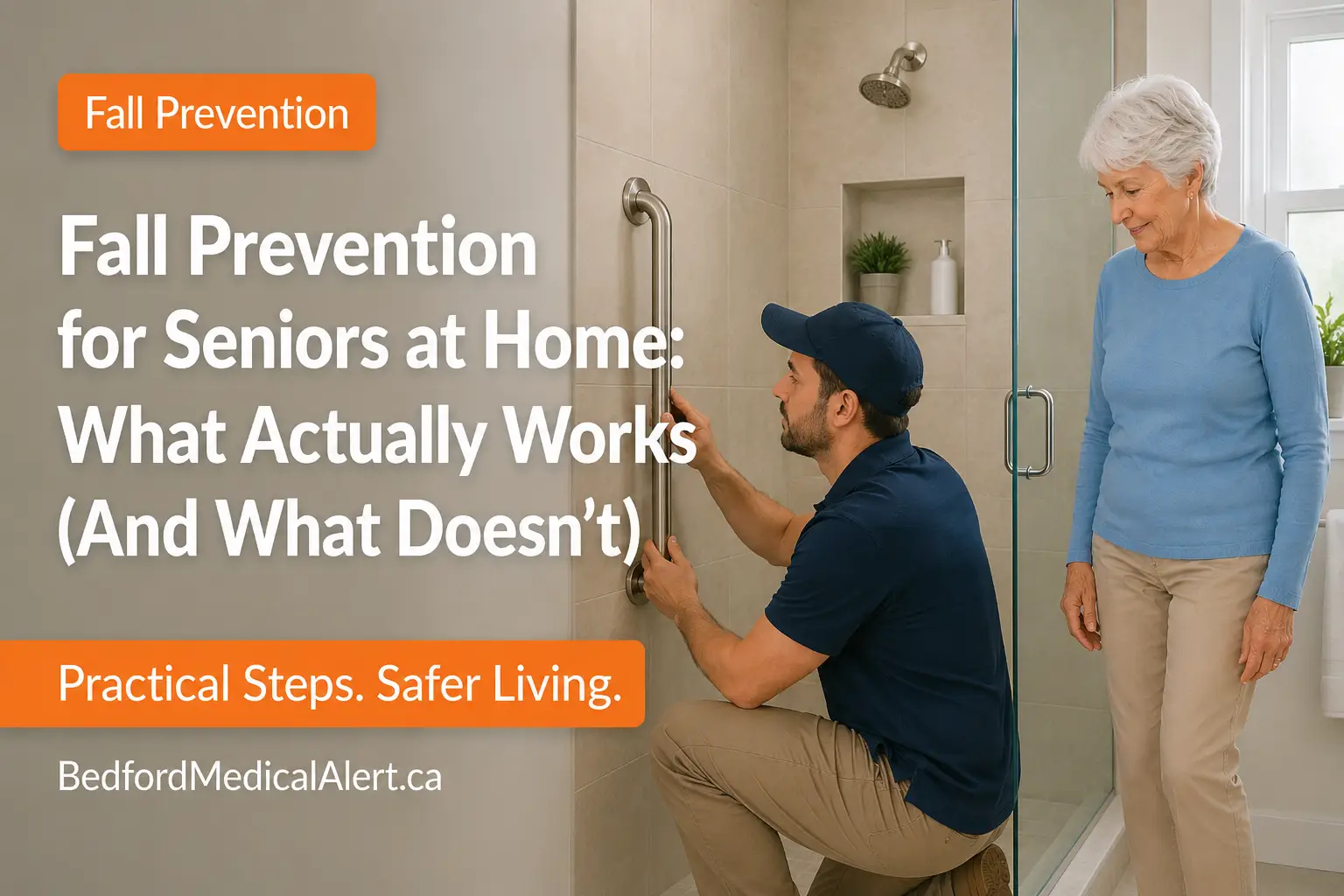
- Install grab bars in the bathroom – beside the toilet and inside the shower or tub; this is where a large proportion of serious falls happen
- Improve lighting throughout the home – especially in hallways, stairways, and the path from the bedroom to the bathroom at night
- Clear pathways – furniture, cords, and clutter all create trip hazards
- Secure stair handrails – both sides of the staircase is ideal
- Use a bath bench or shower chair – standing balance in a wet shower is a significant risk
Occupational therapists can do formal home assessments and are often covered by provincial health programs or employee benefits plans. CCAC (now Home and Community Care Support Services in Ontario) can arrange these assessments.
4. Vision Correction
An annual eye exam can catch changes in vision that increase fall risk – including cataracts, glaucoma, and changes in depth perception. Updating a prescription can make a meaningful difference.
One important caution: bifocals and progressive lenses can actually increase fall risk in some seniors because of the way they distort depth perception on stairs and uneven ground. A separate pair of distance-only glasses for walking and outdoor use is worth discussing with an optometrist.
5. Footwear
Socks on hardwood floors, worn-out slippers, and high heels are all fall risks. The best footwear for seniors at home has:
- A firm, non-slip sole (not a thick cushioned sole, which can reduce ground feel)
- A low, wide heel
- A secure fastening (laces or velcro – not slip-on)
- A snug fit that doesn’t allow the foot to slide
Many physiotherapists and podiatrists can assess whether custom orthotics would help with balance and gait.
6. Vitamin D
Vitamin D deficiency is extremely common in Canadian seniors, particularly through our long winters. Low vitamin D is linked to both muscle weakness and increased fall risk. Health Canada recommends that adults over 70 get 800 IU per day, and many physicians recommend higher doses for those who are deficient.
A simple blood test can check levels. Supplementation is inexpensive and low-risk.
What Doesn’t Work (Or Is Overhyped)
Hip Protectors
Hip protector garments were once widely promoted as a way to prevent fractures from falls. The evidence, however, has been disappointing – studies have found that they have little effect in home settings, largely because people don’t wear them consistently. They may have a role in high-risk nursing home residents, but they’re not a reliable home solution.
General Health and Wellness Programs (Without a Balance Component)
General activity – walking, swimming, light aerobics – is excellent for overall health, but research shows it doesn’t meaningfully reduce fall risk on its own. The fall-prevention benefit comes specifically from balance and strength training, not cardiovascular exercise alone.
Single-Strategy Approaches
Fall prevention works best as a multi-pronged approach. Addressing only one risk factor – installing grab bars but not reviewing medications, or doing exercise but not fixing the lighting – leaves significant risk on the table. The research consistently shows that multi-component programs outperform any single intervention.
The Role of a Medical Alert System in Fall Safety
Here’s an important distinction: a medical alert system doesn’t prevent falls. What it does is dramatically change what happens after a fall occurs.
The biggest danger of a fall for a senior living alone isn’t always the injury itself – it’s lying on the floor for hours or days before help arrives. This is sometimes called a “long lie,” and it can cause dehydration, pressure sores, hypothermia, and pneumonia on top of the original injury.
A monitored medical alert system means that if your loved one does fall, they can summon help immediately – whether they’re in the bathroom, the basement, or the backyard. At Bedford Medical Alert, our monitoring centre answers every call within seconds and stays on the line until help arrives.
For families who worry about a parent or spouse living alone, this is the safety net that makes independent living sustainable – not instead of fall prevention, but alongside it.
Thinking about a medical alert system for a family member? Bedford Medical Alert offers monitored PERS devices for seniors living at home across Canada – with no long-term contracts and a 4.9-star rating from families like yours. Contact us for a free consultation or call 1-888-755-3055.
Creating a Fall Prevention Plan: Where to Start
If you’re not sure where to begin, here’s a practical starting point:
- Talk to the family doctor – ask for a falls risk assessment and a medication review
- Request an OT home assessment – through HCCSS or a private occupational therapist
- Start an exercise program – ask for a physiotherapy referral or look for a community tai chi class
- Get an eye exam – and discuss footwear with the optometrist or a podiatrist
- Check vitamin D levels – and supplement if deficient
- Do a basic home walkthrough – remove rugs, improve lighting, install grab bars in the bathroom
Fall prevention isn’t a single conversation – it’s an ongoing process. But starting with even two or three of these steps can meaningfully reduce risk and help your loved one continue living safely and independently at home.
Frequently Asked Questions
At what age should fall prevention start?
Fall risk increases gradually with age, but meaningful prevention efforts are relevant for most adults from their mid-60s onward. The earlier you start building balance and strength, the better the baseline you’re working from as risk naturally increases.
What is the most common cause of falls in the elderly at home?
Muscle weakness and poor balance are the leading modifiable cause. Environmental hazards – particularly in the bathroom – are the most common immediate trigger. Most falls result from a combination of factors rather than a single cause.
Are fall detection devices worth it?
Automatic fall detection – where the device detects a fall and alerts the monitoring centre without the person pressing a button – is a valuable feature for seniors who may lose consciousness or be unable to press a button after a fall. It’s particularly useful for those with higher fall risk or who live alone. Bedford Medical Alert offers fall detection on select devices.
Does Medicare or provincial health insurance cover fall prevention programs?
Coverage varies by province. Occupational therapy assessments and physiotherapy referrals are often partially covered under provincial plans. Many municipalities also offer subsidized fall prevention exercise programs for seniors. Ask your family doctor or contact your local HCCSS (Home and Community Care Support Services) office to find out what’s available in your area.