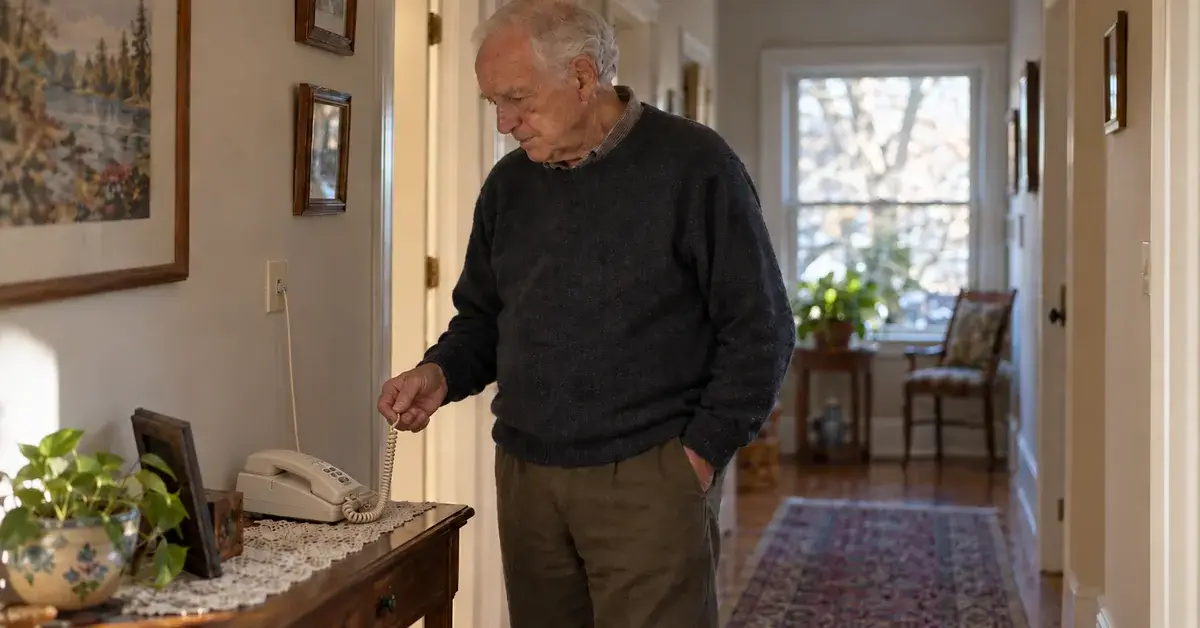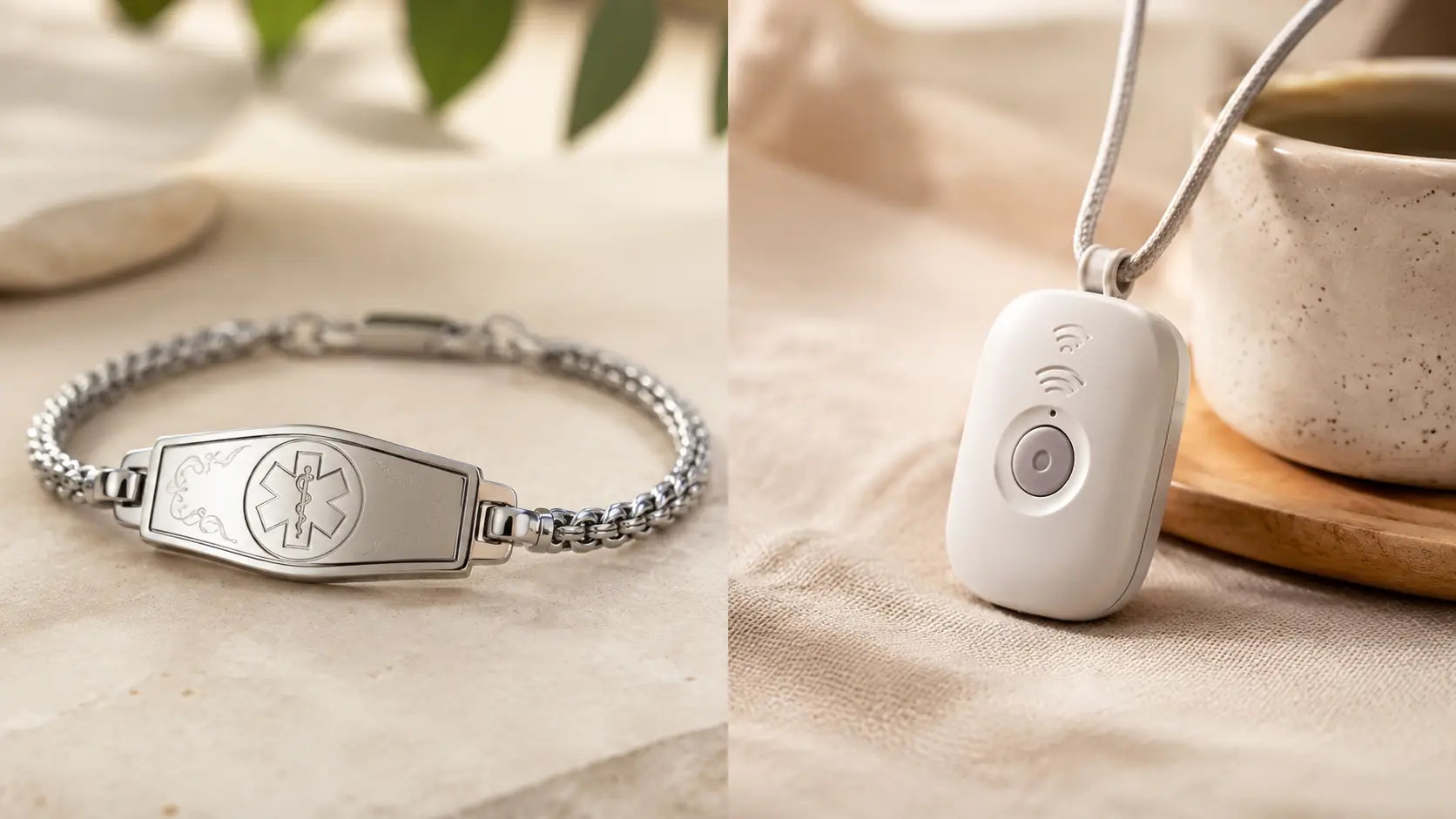
If you have searched for a “medic alert” device for an aging parent, you have probably noticed something confusing: two very different products keep showing up under almost the same name. One is a medical ID bracelet. The other is a monitored emergency help button. They sound alike, they are often mentioned in the same breath, and they solve different problems.
Getting the difference right matters, because choosing the wrong one can leave a senior without the kind of help they actually need in an emergency. Here is a clear, fair explanation of each, and how to decide which one fits.
The short version
A medical ID, often associated with the MedicAlert Foundation, is an engraved bracelet or necklace that tells first responders about a person’s medical conditions, allergies, and medications. A medical alert system, like the ones Bedford Medical Alert® provides, is a wearable help button connected to a 24/7 monitoring centre that can summon help when something goes wrong. A fuller version of the same information, kept at home, is the fridge-door sheet paramedics look for; our page on emergency information for paramedics covers what goes on it.
One communicates information. The other summons a response. Many seniors benefit from both, but they are not interchangeable. The same holds for adults of any age living with a disability or chronic condition; our page on medical alert for adults with disabilities and chronic conditions covers that side.
What a MedicAlert-style medical ID does
The MedicAlert Foundation is a long-established registered charity in Canada. Its core offering is a medical ID, typically a bracelet or pendant, engraved with key health information and a member identification number. The idea is simple and valuable: if a senior is found unconscious or unable to speak, a paramedic can read the bracelet, call the associated hotline, and quickly learn about conditions like diabetes, epilepsy, heart conditions, or drug allergies.
This is genuinely useful, especially for people with complex medical histories. The strength of a medical ID is that it works passively. The wearer does not have to do anything in the moment. The information is simply there for whoever finds them.
But notice the limitation. A medical ID only helps once someone has already discovered the person and decided to look for it. It does not, on its own, bring anyone to the scene. If a senior falls in an empty house and cannot reach a phone, the bracelet does not change the fact that no one knows what happened.
What a medical alert system does
A medical alert system closes exactly that gap. The senior wears a help button, usually as a pendant or wristband, or uses an in-home unit. When they need help, they press the button, and the call goes straight to a monitoring centre staffed around the clock. The operator speaks with them, assesses the situation, and dispatches the right help, whether that is a family member, a neighbour, or emergency services.
The most capable systems add automatic fall detection, which can place that call even when the wearer is unable to press the button themselves. This is the feature that most directly addresses the “fell and could not reach the phone” scenario.
With Bedford Medical Alert, the monitoring centre is Canadian and operates 24/7, the equipment is included with the subscription, and there is no long-term contract. The focus is on getting a real person on the line fast when it matters most.
Not sure which one your family needs? Our Canadian team is happy to explain the options in plain language, with no pressure. Call 1-888-755-3055 any time, 24/7, and we will help you figure out the right fit.
Why the two get confused
The confusion is understandable. Both are worn on the wrist or around the neck. Both are associated with seniors and safety. And the everyday phrase “medic alert” gets used loosely to mean either one. Retailers and search engines compound the problem by listing engraved ID jewelry and monitored alert devices side by side.
The practical way to cut through it is to ask one question: do you need something that tells responders who the person is, or something that brings responders to the person? If the answer is the first, a medical ID is the right tool. If it is the second, you need a monitored medical alert system. If it is both, that is common, and the two work well together.
Part of the confusion is heritage. MedicAlert Foundation Canada is a registered charity that has been engraving IDs and maintaining member health records for decades, and the bracelet is designed to be found and read by first responders. Medical alert systems grew up separately, out of personal emergency response technology built around monitoring centres, and the category borrowed half the name. Two different products ended up sharing one vocabulary, and search engines mix them to this day.
Can a senior use both?
Yes, and many do. A medical ID and a monitored alert system are complementary rather than competing. A senior with significant medical conditions might wear an engraved ID so that responders instantly understand their history, while also wearing a monitored help button so that help is actually called in the first place. The bracelet speaks for them; the alert system speaks up for them.
When budgeting, it helps to think of them as two separate decisions rather than one. The medical ID is usually a one-time or low-cost membership. The medical alert system is an ongoing monitoring service. Knowing that up front prevents the disappointment of expecting one product to do the other’s job.
Questions to ask before you decide
A short list of questions cuts through most of the confusion when you are comparing options for an older parent or for yourself.
First, what is the worst-case scenario you are trying to cover? If the fear is a senior collapsing at home with no one around, an engraved bracelet alone will not bring help. A monitored system will.
Second, does the person spend most of their time at home, or are they out and about? That answer points you toward an in-home system or a mobile, GPS-enabled one.
Third, will they actually wear it? Comfort and discretion matter. A device left in a drawer protects no one, which is why pendant, wristband, and watch styles exist, and why non-wearable in-home options are available for those who refuse to wear anything.
Fourth, what does the monthly cost include, and is there a contract? With Bedford Medical Alert there is no long-term contract and the equipment is included, so the answer stays simple.
Finally, who answers the call, and where? A Canadian monitoring centre staffed 24/7 is worth confirming before you commit.
How to choose the right medical alert system
If you have decided you need a monitored system, the next step is matching the device to the senior’s life. An in-home pendant and base station suits someone who is mostly at home. A mobile, GPS-enabled pendant or watch suits an active senior who travels outside the house. For someone who resists wearing anything, a non-wearable in-home fall detection option can be the answer.
Our guide on how to choose a medical alert system in Canada walks through the decision in detail, and you can look at the Go Anywhere fall detection pendant to see how a wearable monitored device differs from a simple ID bracelet. If you want to understand what sets the service apart, see why Canadians choose Bedford.
Questions families ask about MedicAlert and medical alert systems
Is MedicAlert the same as a medical alert system?
No. MedicAlert is best known for engraved ID bracelets tied to a health-information registry. A medical alert system is a monitored help button. One informs responders once they arrive; the other is how they get called in the first place.
Does a MedicAlert bracelet detect falls or call anyone?
No. The bracelet is not electronic. It speaks for a person after help has already found them. If the worry is falling while alone, that is the job of a monitored button, and some Bedford devices add automatic fall detection. In general terms, fall detection uses motion sensing to recognize a hard fall and open a call on its own, and no sensor on the market catches every fall.
Can someone wear both?
Yes, and they pair well. The button brings help; the bracelet briefs them when they arrive. There is no conflict between the two, and for a senior with complex conditions who also spends hours alone, the combination covers both failure points.
Will insurance or benefits cover either one?
Sometimes. Bedford’s services are funded or approved under a range of third-party programs, from some private insurance plans to veterans’ and community programs, and Bedford is as likely as any other provider to qualify. Coverage depends on the person’s situation, so the practical step is to ask your program or plan directly, and to ask us what paperwork helps.
What does each one cost?
A MedicAlert membership is an annual fee set by the charity. A monitored medical alert service is a monthly subscription; at Bedford the equipment is included with the subscription and there are no long-term contracts. Exact monthly pricing depends on the device, which is why we quote it in a conversation rather than a table.
Which should an aging parent get first?
If they live alone, or spend long stretches of the day alone, the monitored button usually comes first and the ID complements it. If they have complex medical conditions and are rarely alone, the ID may come first. It is a fit question, not a brand question, and it deserves ten honest minutes on the phone.
Which one your family actually needs
A medical ID and a medical alert system are both worth considering, and neither is “better” in the abstract. They do different jobs. A medical ID makes sure responders know the facts. A monitored medical alert system makes sure responders come. For most seniors who want to stay safe while living independently, the ability to summon help, especially with automatic fall detection, is the piece that brings the most peace of mind. Our article on fall prevention for seniors at home is a useful companion if home safety is your main concern.
And if the brand stuck in your head is the American one from the late-night TV ads, our guide to Life Alert in Canada compares it to the Canadian options.
Want a monitored device that brings help, not just information? Explore the Go Anywhere fall detection pendant or call 1-888-755-3055 to talk with our Canadian team. No long-term contract, equipment included, and 24/7 monitoring answered right here in Canada.