One request comes up again and again at Bedford: not “a medical alert” in general, but specifically “something that looks like a watch.” Usually a parent tried a pendant, disliked wearing it, and left it in a drawer. So this guide sticks to the wrist option: what a medical alert watch actually does, who it suits, and where it is the wrong tool for the job.
At Bedford Medical Alert®, the wrist option is the Go Anywhere Watch, one of five services we build and monitor for Canadian families. We are Canadian owned and operated, our monitoring centre is here in Canada, and the equipment is included with the subscription rather than sold on top of it.
What a medical alert watch actually is
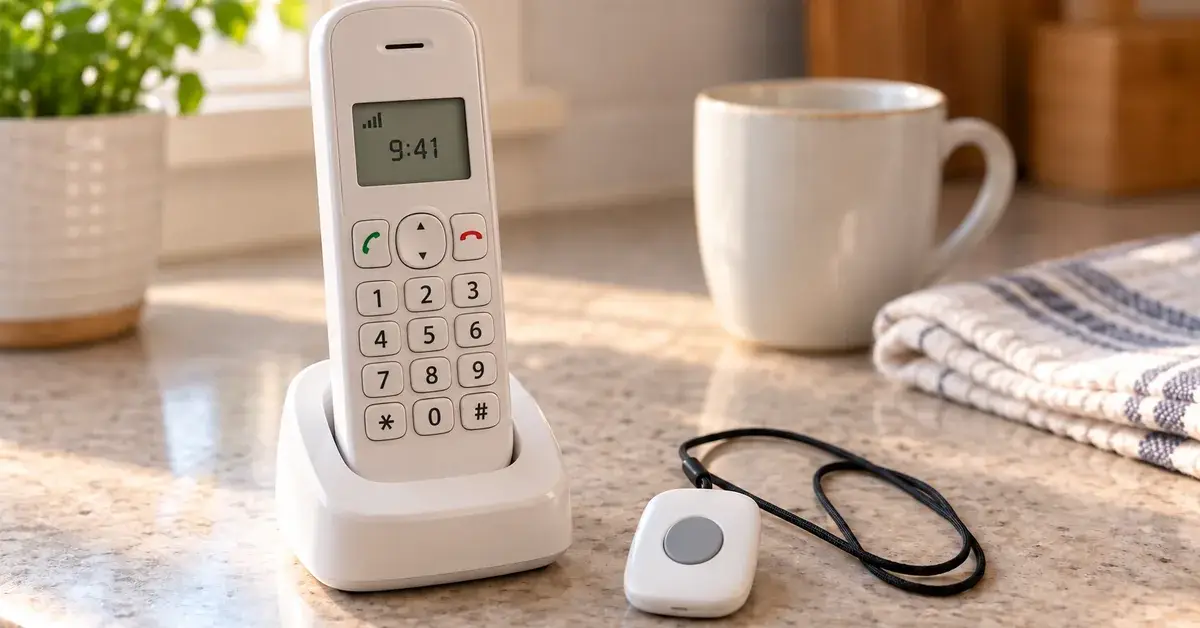
A medical alert watch is a wrist-worn version of a mobile medical alert. Behind a face that reads the time, it carries a help button, a cellular connection, and a speaker for two-way voice. Press and hold the button and it places a call to a monitoring centre, the same way a pendant would, with no phone needed in hand.
There is one practical difference worth knowing up front. Because the watch runs on the cellular network instead of a home base unit, it keeps working when the wearer leaves the house, as long as there is coverage in the area. An in-home pendant is tied to its base station and stops protecting a person the moment they step off the property.
The word “watch” is where people get tangled up. A medical alert watch is not a consumer smartwatch bought off the shelf. An Apple Watch or a Fitbit is a fitness and notification device that can, with setup, reach a personal contact or 911. A medical alert watch is built first as an alert device, wired to a monitoring service instead of to your own phone contacts. We put the full comparison in a separate piece on smartwatches versus a dedicated medical alert watch; the short version is that they were designed to solve different problems.
Who a wrist device suits
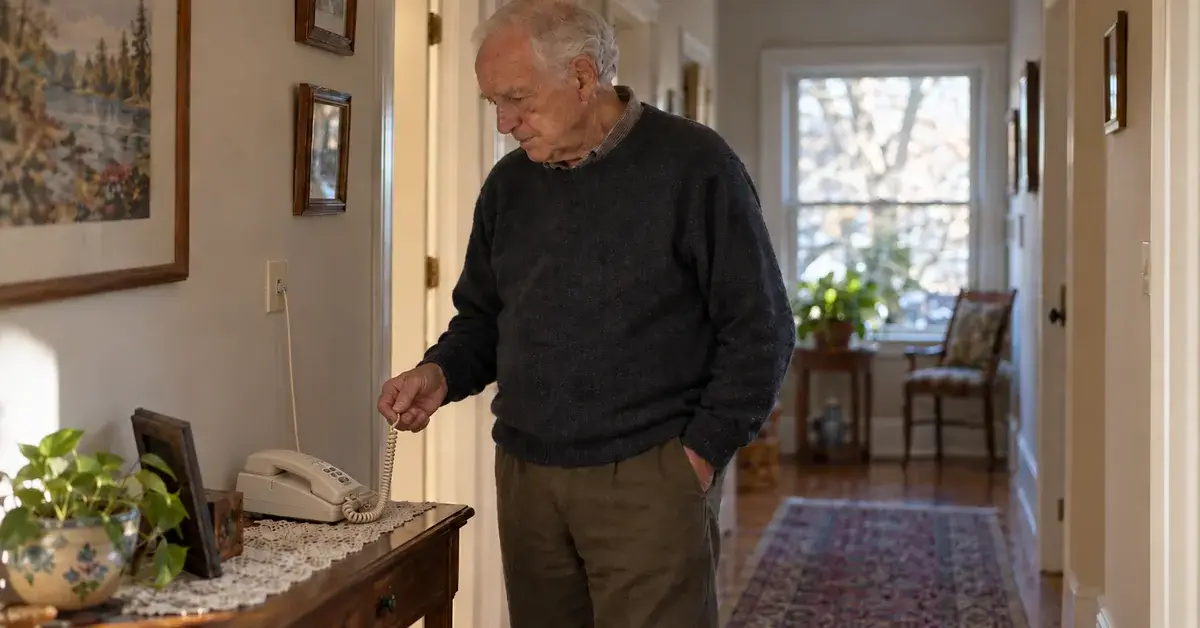
The clearest fit is the person who will wear a watch but not a pendant. In our experience, people who turn down a pendant usually object to how it looks, not to how it feels. A watch reads as ordinary. Nobody at the dinner table asks about it. The pattern we see is simple: a device that feels like a watch actually gets worn, and one left in a drawer protects no one.
A wrist device also fits an active life. Someone who walks every morning, gardens, volunteers, or takes transit is often away from a home base unit, and a watch with GPS travels with them. There is a dignity point here too. A wrist device lets a person keep a routine, the same morning walk, the Saturday at the community garden, without signalling to everyone in the room that they wear an alarm. For a parent who is mostly at home and rarely far from a base station, an in-home pendant is usually the simpler and cheaper answer. More on that split further down.
How the Go Anywhere Watch works
The Go Anywhere Watch puts the help button on the wrist. When it is pressed, the watch connects over the cellular network to our Canadian monitoring centre, and an operator speaks with the wearer through the built-in speaker. Because the watch is mobile, it can share an approximate GPS location, so an operator is not guessing where someone is when they are out on a walk.
What the operator does next follows a plan we write with each subscriber ahead of time. That personalized response plan lists who to call and in what order, the medications on file, and any access notes for the home. No one should have to recite their history in a bad moment. It is already sitting in front of the operator. The watch is worn and charged much like an ordinary watch, and the two-way voice is hands-free, so once the button is pressed the wearer can speak with an operator without holding anything. Getting started is meant to be simple, what we call Easy Setup, and the watch arrives ready to use as part of the subscription.
Not sure whether a watch or a pendant fits your parent’s day? Talk it through with our Canadian team first. Call 1-888-755-3055 and we will walk you through the Go Anywhere Watch, how monitoring works, and Easy Setup, with no pressure and no long-term contract.
What about fall detection
Search for a medical alert watch and “fall detection” tends to show up in the same breath, so it is fair to be plain about it. Fall detection is a separate capability from the help button, and no device on the market catches every fall. Any provider who promises otherwise is overpromising. The watch is built around something more dependable: pressing for help and being located quickly, wherever the person happens to be.
At Bedford, the product built specifically around fall detection is Silver Shield, a non-wearable system that uses radar-style sensing to watch a room for a possible fall with nothing worn on the body. It runs on protocols a family sets in advance and alerts the caregivers that family chooses, which suits a person who forgets or refuses to wear a device at all. If fall detection is the priority for your household, that is the place to look, and our team can talk you through how it differs from a worn device.
Watch, pendant, or in-home: matching the device to the person
Three questions usually settle which device fits. Is the person mostly at home, or often out and about? Will they wear something on the wrist, around the neck, or nothing at all? And who should be reached when something happens? A mostly-home parent who is fine with a pendant is well served by an in-home system with a waterproof button that can be worn in the shower, where a lot of falls happen. An out-and-about parent who refuses a pendant is the classic case for the watch. Someone who will not wear anything is the case for Silver Shield.
The trap to avoid is buying the device that impresses you and hoping the person will adapt to it. It works better the other way around. Start from how your parent actually lives, then match the device to that. It also helps to bring the person into the decision rather than handing them a choice already made, since a watch someone picked for themselves gets worn far more reliably than one that simply showed up in the mail. If you want to work through it step by step, our guide to choosing a medical alert system in Canada lays the options out side by side.
No long-term contract, and the equipment is included
Two things are worth confirming with any provider before you pay. First, whether the device is included with the service or sold to you on top of it. With Bedford, the equipment comes with the subscription. Second, whether you are signing into a long contract. Our plans typically run month-to-month after a three-month minimum at the start, and there are no cancellation fees.
The rest is who stands behind the button. Our monitoring centre is in Canada, and our operators follow the personalized plan written for each subscriber. Bedford is an OCSA member, trusted by clinicians across Canada from hospital education programs to the families who rate us 4.9 stars on Google. And Bedford brings three generations of experience to it.
If a wrist device sounds like the right fit, see how the Go Anywhere Watch works: a help button on the wrist, GPS, two-way voice, and 24/7 Canadian monitoring, with the equipment included. Call our Canadian team at 1-888-755-3055 to set it up. Recommended by doctors and hospitals, and rated 4.9 stars by Canadian families.