
A medical alert system is built around one small action: pressing a button. But the button is only the beginning. What actually matters is everything that happens in the seconds and minutes after you press it. This page walks through that response from start to finish, so you know exactly what to expect long before you ever need it.
Understanding the response also helps you compare providers. Two pendants can look identical while the monitoring behind them is very different: who answers the call, what country they are in, and whether they follow a plan you set up in advance. Here is what happens when you press a medical alert button monitored by Bedford Medical Alert®.
If you are introducing a medical alert to a hesitant parent, seeing exactly what the button does can help; our guide on how to talk to a parent about a medical alert covers how to raise it.
Every Bedford device has a help button. On an in-home system it sits on a pendant, a wristband, or the base unit. On a mobile device it travels with you on a pendant or a watch. Pressing it once sends an alert. There is no number to dial, no menu to navigate, and nothing you need to explain in that first moment. One press is enough to start the response.
For people who worry about a fall that leaves them unable to reach the button, some devices add automatic fall detection, which can start the same response on its own. We cover that in general terms further down, and in more detail in our guide to how automatic fall detection works.
The instant the button is pressed, the device opens a connection to a monitoring centre. In-home systems carry the signal through the base unit. Mobile devices use built-in cellular and location technology, so the alert works when you are away from home. Either way, the signal does not land in a generic call queue or a voicemail box. It goes to a staffed monitoring centre based in Canada that operates 24 hours a day, every day of the year.
This is a detail worth confirming with any provider you consider. Where is the monitoring centre, and who answers the call? Bedford monitoring is Canadian and always on, which means the person who responds understands how Canadian emergency services work and can speak with you in a familiar way.
Within seconds of the alert, an operator connects through the device’s two-way speaker. You do not need to be holding a phone or near one. You can speak and listen through the pendant, wristband, watch, or base unit, often from across the room. The operator identifies themselves, confirms who they are speaking with, and asks what is happening.
If you can answer, you simply tell them. If you cannot answer, the operator does not assume it was a false alarm. They follow a set procedure for a silent or unclear call, and that is where your response plan takes over.
This is the part that separates a thoughtful monitoring service from a basic one. When you set up your service, Bedford records a response plan for your household. It can include your medical information, the medications you take, where a spare key is kept, who your emergency contacts are, and the order in which you want them called.
Bedford operators follow these personalized response plans rather than a single generic script. The response is shaped around your situation: the contacts you trust, the details a paramedic would want to know, and your own wishes about when to involve emergency services. That is a more intricate approach than many providers take, and it is one of the reasons families choose Bedford. You can read more on our why families choose Bedford page.
Want to know exactly how Bedford would respond for you or for a parent? Speak with a Canadian care consultant and build a response plan around your household, with no obligation. Call 1-888-755-3055 and we will walk you through it.
Put together, the journey from a pressed button to help arriving follows the same clear path every time. The operator answers, listens, follows your plan, contacts the right people, and stays with you. That sequence is the same in every city Bedford serves, and families in the capital can see the local picture in our medical alert systems in Ottawa guide. The timeline below summarizes that sequence at a glance.
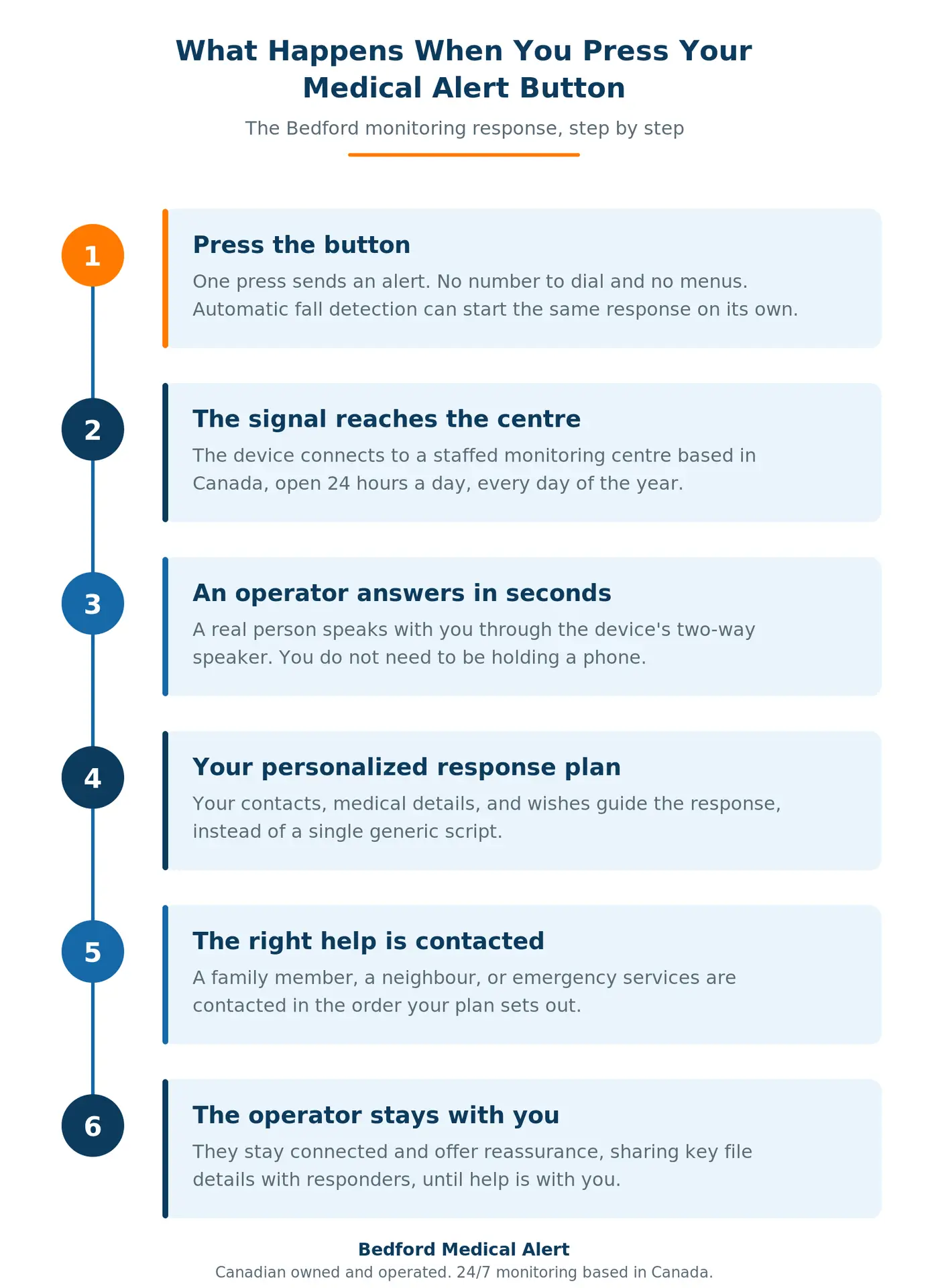
Based on your plan and what the operator learns from the call, help is arranged. For a minor issue, that might mean calling a family member or a neighbour who can come over to help you up or check in. For a possible medical emergency, the operator can dispatch emergency services and pass along the information in your file, so responders arrive already knowing the essentials.
You decide these choices when you set up the plan. Some people want family called first for anything short of an emergency. Others want paramedics sent immediately for specific conditions. The plan captures those wishes so no one has to guess in the moment, and so the response matches what you would want for yourself.
A good monitoring response does not end the instant a call is placed. The operator stays connected, keeps talking with you, and offers reassurance while help is on the way. If your situation changes, they can adjust. If a family member needs directions, a buzzer code, or where to find a key, the operator can share what is in your file. The goal is simple: someone stays with you from the moment you press the button until help is at the door.
That continuity is one of the clearest differences between a monitored medical alert system and trying to summon help on your own. For a closer look at that difference, see our comparison of how Bedford responds versus calling 911.
Sometimes a person cannot press the button at all, after a hard fall, for example. This is the situation automatic fall detection is designed to help with. In general terms, fall-detection devices use motion sensors to recognize patterns that may indicate a fall, and they can start the same monitoring response on their own, without a button press.
It is important to be clear about what this technology can and cannot do. Fall detection does not detect falls with perfect accuracy, and no device can promise to catch every fall or guarantee a medical outcome. It is one helpful layer of protection, not a guarantee. If automatic fall detection matters to you, confirm which devices include it and how it works. Mobile options such as the Go Anywhere fall detection watch carry both a help button and fall detection for use at home and away from it.
None of this works until the device is in place, so setup is meant to be simple. Bedford uses an Easy Setup process, and the equipment is included with your subscription rather than sold as a separate purchase. There is no long-term contract. Plans typically run month-to-month after a three-month minimum at the start, with optional savings on a six or twelve month initial term, and service always reverts to month-to-month after that. There are no cancellation fees.
Setting up your response plan at the same time is what makes the rest of the journey work the way you want. A few minutes spent recording your contacts and preferences pays off in a faster, calmer response on the day it matters.
When families compare medical alert systems, attention often goes straight to the device. The more useful question is what happens after the button is pressed. What shapes how a call actually goes is the monitoring behind the device: a Canadian centre, trained operators, a personalized response plan, and an operator who stays on the line until help arrives. Bedford Medical Alert is Canadian-owned and operated, is recommended by doctors and hospitals, and holds a 4.9-star Google rating from families across the country.
Knowing the journey from end to end is the best way to choose a system with confidence, whether for yourself or for someone you love.
Bedford Medical Alert builds the response behind the button: 24/7 monitoring based in Canada, equipment included with your subscription, and no long-term contract. See how the in-home Home Freedom system works, or call 1-888-755-3055 and we will help you set yours up.
Tell us a little about your situation and a Bedford specialist will call you back, usually the same day. No pressure, no obligation.
This page covers what happens after the press. The companion question, the situations where pressing is the right call in the first place, is covered in when to press a medical alert button.