Every serious Bedford alert ends the same way: with a call to 911. That is worth saying up front, because this page is not about beating the emergency system. Nothing beats 911 when you can reach a phone, describe what is wrong, and give your address. A monitored medical alert exists for the moments when one of those three things is not true.
What happens when you press the button
When a Bedford subscriber presses their button, or a device with automatic fall detection, such as the Go Anywhere fall detection watch, opens a call on its own, an operator at our 24/7 Canadian monitoring centre answers through the device. The operator is not starting from zero: they follow a personalized response plan built with the family at setup, so they already know the address, the medical notes the household chose to share, and who to call in what order. If the situation calls for 911, the operator makes that call and relays everything: location, medical context, how to get in. If the person cannot speak, the operator still has the plan, and acts on it. We walk through the full sequence in what happens when you press a medical alert button.
Not every emergency needs an ambulance
Here is the part most families do not expect. A 2025 study in Prehospital Emergency Care (Boland and colleagues) reviewed 18,660 alarm-triggered 9-1-1 responses across ten years: emergency crews ended up making patient contact in about a third of the calls, and transported the person in about one in four. Read that plainly: a large share of button presses are falls without serious injury, help getting up, or a frightening moment that settles. A monitoring operator can send a family member or a neighbour, arrange lift assistance after a fall, or stay on the line while someone collects themselves, and save the 911 call for the situations that need it. Dialing 911 yourself offers exactly one response, and it is the right one only some of the time.
Where a button helps that a phone cannot
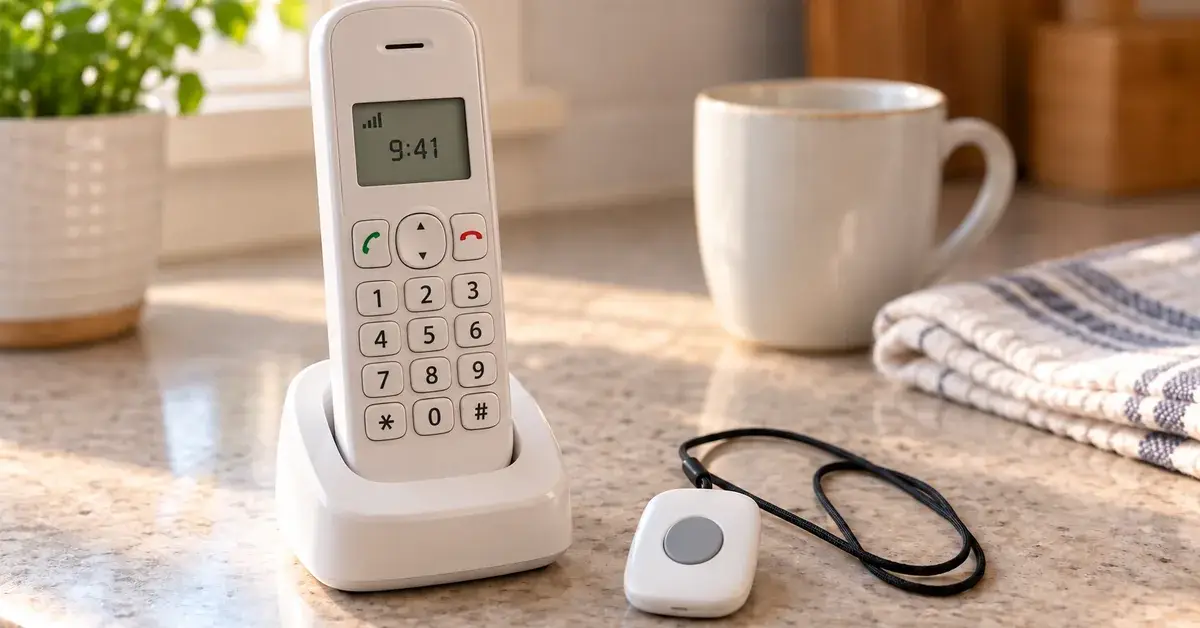
A phone assumes you can reach it, unlock it, dial it, and talk. After a fall, any one of those can be the thing that fails. A waterproof button worn in the shower and to bed removes the reaching problem. Two-way voice through the device removes the dialing problem. The response plan on file removes the explaining problem. None of this makes help arrive faster than a well-placed 911 call, and we will not tell you otherwise. It makes help possible when that call is out of reach.
911, with a layer around it
911 is the emergency system. Bedford is a layer around it: a person who answers at 3 a.m., knows whose button just went off, decides with you rather than for you, and brings 911 in with your file open when the moment is serious. Households usually want that layer for the nights, the showers, and the hours spent alone. To see how our systems put it together, start with the Home Freedom in-home system or compare all Bedford systems.
Weighing a medical alert for someone you love? Bedford’s Canadian care team will talk it through in plain language, with no obligation. Call 1-888-755-3055 any time, day or night.