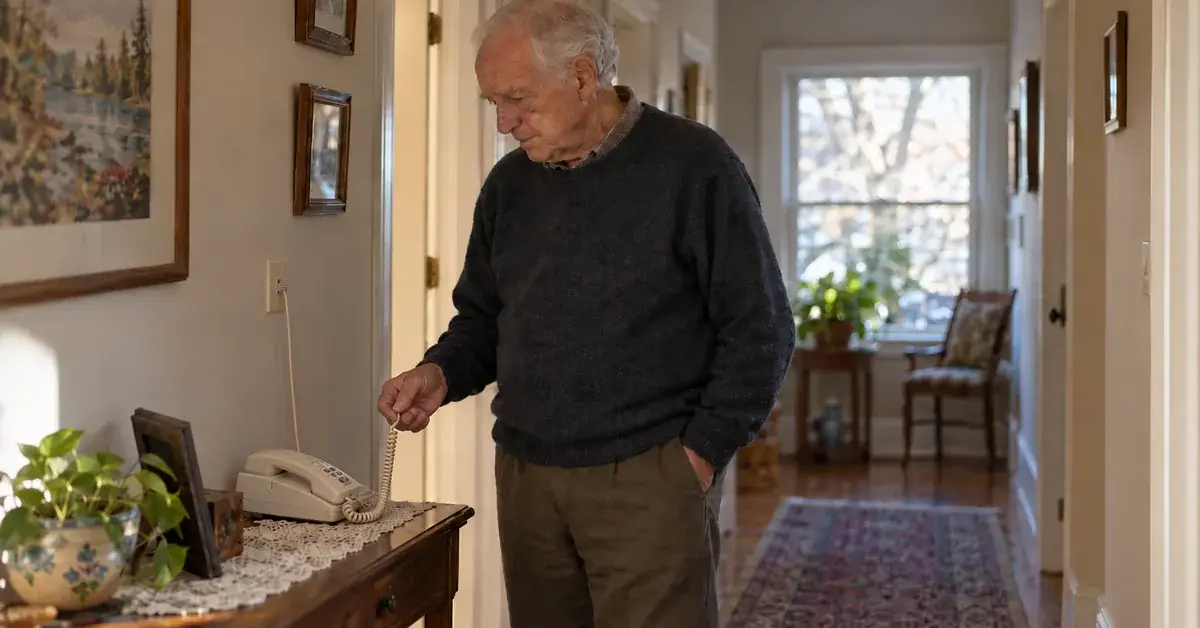
The storm that matters is rarely the one on the news. It is the freezing rain that arrives on a weeknight, takes the power out on one side of the street, and leaves a parent alone in a cooling house with a cordless phone that no longer works and a daughter forty minutes away on roads nobody should drive. Canada’s own preparedness pages are written for exactly that night, and they are specific about what an older adult’s household should have ready. This post sets out what those pages ask for, what is different when the household is a senior living alone, and where a monitored alert from Bedford Medical Alert® fits in the plan. It replaces an earlier version of this post from March 2025; every page cited was read on 26 October 2026. Ice, footwear and the walk outside are covered in our companion post on preventing falls on ice and snow, so they are not repeated here.
What Get Prepared Canada asks every household to have
The Government of Canada’s emergency kit checklist (updated 30 April 2026) is built around one number: enough to stay safe and comfortable for at least three days, 72 hours, whether you shelter in place or have to leave. The basic list is short and ordinary. Two litres of water per person per day. Non-perishable food and a manual can opener. A wind-up or battery-powered flashlight and radio, with extra batteries and battery packs. A first aid kit. Cash in small bills. A phone charger and a power bank. Spare keys. Toilet paper and tissues.
The part families skip is the paper. The checklist asks for copies of identification, the household’s emergency plan with contact information, a list of every medication with its dose and purpose, the contact details of doctors and health services, and the provincial health number. For an older adult, it adds prescription medications, medical equipment and eyeglasses. The same page lists what to swap in each fall: warm clothing, heat packs, extra batteries, gloves, socks, ice grippers and a portable shovel, with the clock changes as the reminder to check expiry dates.
Before the storm: the lines written for older adults
The federal winter storm page (updated 12 March 2026) opens with the point that a major winter storm can last for days and make travel difficult, so the supplies have to be in the house before it starts. Two of its lines are aimed squarely at families like ours. The first asks you to check on older adult relatives and neighbours when a storm is forecast, because they may not be able to get out safely to shop and may need food, medications and other supplies brought in. The second is about the backup heat source: a fireplace, wood stove or space heater, kept in working order, so that a house without power does not become a house without heat.
With heat comes carbon monoxide, and the page is blunt about it. Certified carbon monoxide alarms with battery backup belong in hallways and outside sleeping areas. A fuel-burning generator, barbecue or camping stove is never used inside a home, garage, basement, crawlspace or shed, or under an awning; a portable generator runs at least six metres from any building with its exhaust pointed away from windows and doors. During the storm, check that outdoor exhaust vents are clear of snow and ice, because a blocked furnace vent is how carbon monoxide builds up indoors. Shovels and salt go somewhere easy to reach before the first flake. For warnings, the WeatherCAN app pushes local alerts to a phone; the winter ones cover freezing rain and flash freezes, snow, snow squalls, blizzards and winter storms, colour-coded by expected impact.
If the power goes out
The federal power outage page (also updated 12 March 2026) has a section called “Plan for medical needs” that reads like it was written for this audience. Talk to your doctor about how your medical conditions may be affected during an outage. Know your medication list and plan for critical medication. Make a plan for any medical device that runs on electricity, any medicine that has to stay refrigerated, and any device that depends on the internet. And then, in the government’s own words: “Enroll in a medical alert program that will signal for help if you need it. Make sure this system will work during a power outage.” It goes on to ask for an evacuation route that does not use the elevator, and for apartment residents who may need help evacuating to tell their property management in advance.
The practical lines for the hours in the dark are just as plain. Flashlights, not candles. Keep the fridge and freezer closed; a full freezer holds for 24 to 48 hours if the door stays shut. Turn the thermostat down and leave one light switched on so you can see when the power returns. Put the phone in power-saving mode if you cannot charge it. If a carbon monoxide alarm sounds, leave the house at once, get to fresh air, and call 9-1-1 from outside. A natural gas fireplace can provide warmth until the power is back; a gas stove can cook but is never a heater.
The cold itself
Health Canada’s extreme cold page lists seniors 65 and older among the people at greater risk of frostbite and hypothermia, alongside anyone in a poorly insulated home or a home without heat or power, and people on certain medications. Its threshold is worth knowing: the risk of frostbite and windburn rises at wind chill values below minus 27. The advice is the familiar kind, done properly. Dress in layers with a wind-resistant outer layer, choose wool or synthetic fabrics over cotton, wear a hat, gloves, warm socks and a scarf pulled over the nose, and change out of wet clothing as soon as possible, because a wet body loses heat faster. Anything beyond that is a question for the family doctor, not for us.
Building a winter plan for a parent who lives alone? Call our care team at 1-888-755-3055 for a complimentary consultation by phone. We will ask what the home phone is, who is nearby and what the house heats with, and tell you plainly which setup fits and what it does when the power is out. Bedford is Canadian-owned, and our monitoring centre is based in Canada and staffed 24/7.
Where a monitored medical alert fits the plan
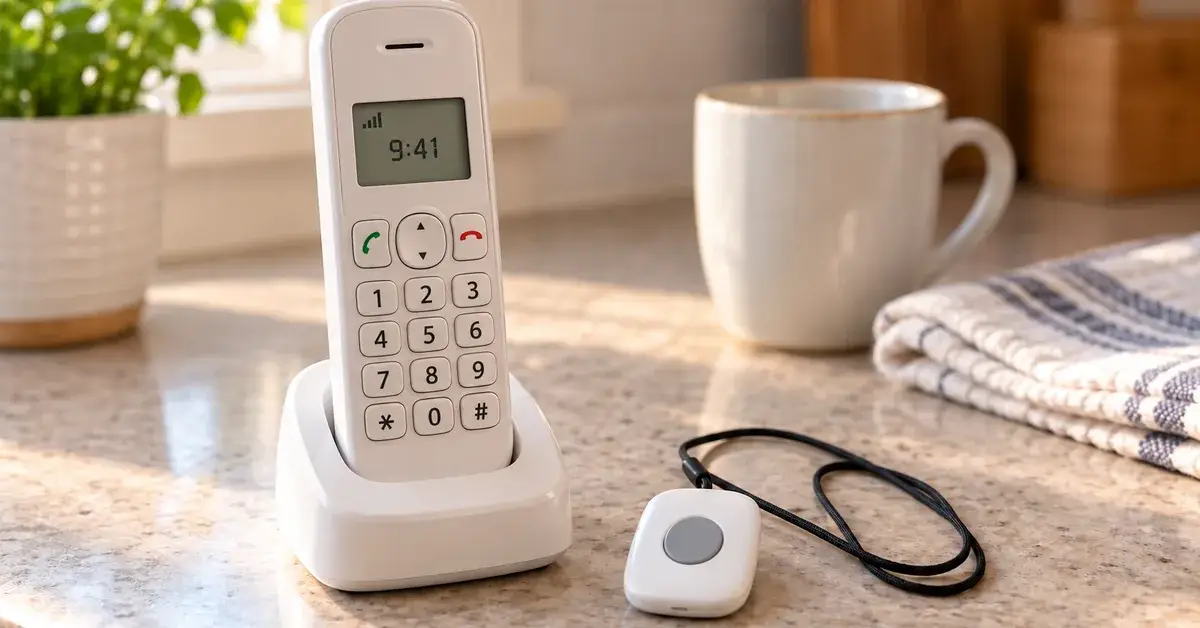
Get Prepared’s instruction is the right one, and the second half of it matters as much as the first: make sure the system will work during a power outage. That is a question with a real answer for each household, and it depends on the connection. Our page on whether you need a landline for a medical alert walks through it: a base unit on a true copper landline keeps its line in an outage; a home phone that arrives over cable or fibre depends on the battery in the modem in the basement; a cellular unit depends on its own backup battery and on the mobile network’s tower batteries, which carry a short outage and are strained by a long regional one. The rated backup time of any base unit varies by model, which is why it belongs on your question list for any provider, including us.
With Bedford, the Home Freedom base unit carries a backup battery, connects through a landline, a VoIP line or an LTE unit, and needs no Wi-Fi; the help button is a waterproof pendant or wristband that works up to 800 feet from the base and never needs charging. For the person who goes out, the Go Anywhere pendant carries its own cellular connection and GPS, and its battery runs up to a week without fall detection or up to three days with it, so the storm-week habit is simple: charge it when the warning comes in, the way you charge the phone. Pressing either button reaches our monitoring centre in Canada at any hour, and the operator works from a response plan your family set up in advance: who is called first, who is next, and when paramedics are sent. Automatic fall detection is optional on both systems; it senses the motion patterns typical of a fall and calls on its own, and no sensor on the market catches every fall, so the button stays the main way to call for help.
One more line from the storm page belongs in the family plan: the check-in. A parent on a monitored system still needs the call when the warning comes in, the neighbour who knows which house to knock on, and a written contact list in the kit. The alert covers the moment; the family covers the days around it. If the plan has never been written down, our post on the caregiver’s backup plan is the place to start, and our page on emergency information for paramedics covers what to leave by the door.
On terms: plans typically run month to month after a three-month minimum at the start, with optional six or twelve month initial terms if the savings suit you. Service reverts to month to month afterwards, and there are no cancellation fees. The equipment is included with the subscription. Bedford brings three generations of experience to this work, is a member of the Ontario Community Support Association, and has supported hospital education programs and research initiatives from UHN Toronto Rehab to Trillium Health. Nothing in this post is medical advice; the federal pages linked below and your parent’s own doctor govern the medical parts of the plan.
If your parent lives alone through the winter, Home Freedom puts a help button within reach in every room, with a base unit that carries a backup battery, equipment included and 24/7 monitoring from Canada; for the walk outside, the Go Anywhere pendant adds GPS and its own cellular connection. Call 1-888-755-3055 and tell us how the house is heated and what the phone line is; we will build the plan around both.
Sources (every page read on 26 October 2026)
- Government of Canada, Get Prepared, “Emergency kit checklist,” page updated 30 April 2026: canada.ca
- Government of Canada, Get Prepared, “Winter storms: how to prepare,” page updated 12 March 2026: canada.ca
- Government of Canada, Get Prepared, “Power outages: how to prepare,” page updated 12 March 2026: canada.ca
- Health Canada, “Extreme cold” (It’s Your Health), page updated 19 October 2021: canada.ca
- Bedford Medical Alert, the landline, Home Freedom and Go Anywhere pages linked above