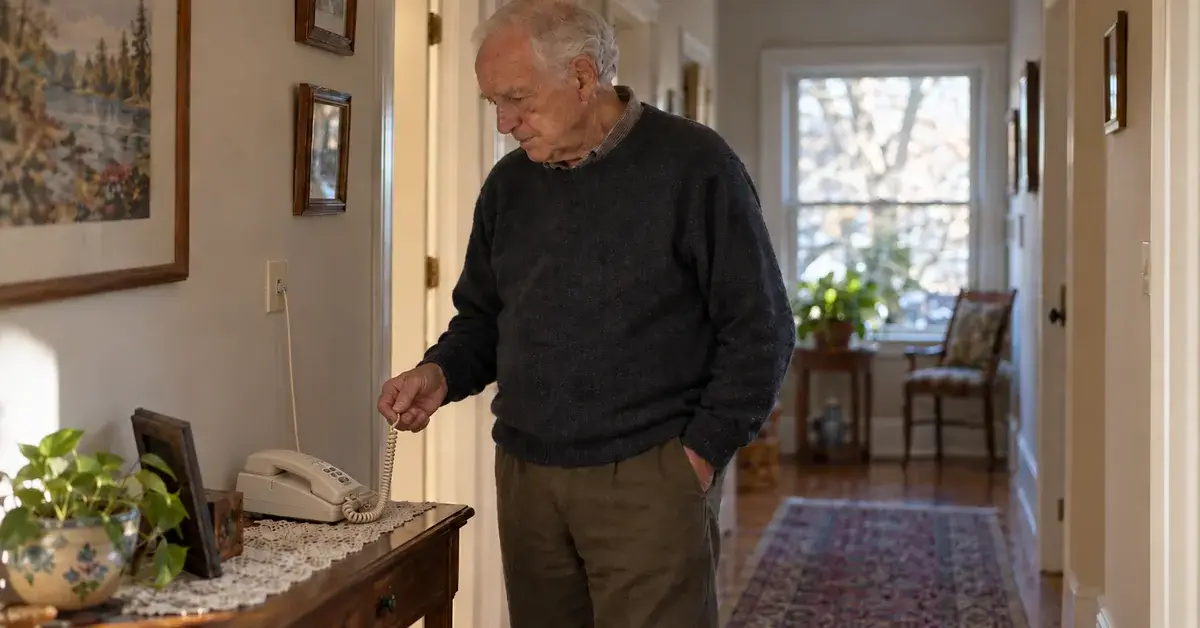
The phrase “personal emergency response system” rarely comes up at a kitchen table. It shows up on a hospital discharge form, in an occupational therapist’s note, or on a provincial funding application. Then an adult child types it into Google, trying to work out what their parent was actually told to arrange. This guide answers that in plain language: what a personal emergency response system is, how one works in Canada, the main types, and how funding and monitoring location change the decision.
At Bedford Medical Alert®, a personal emergency response system, or PERS, is what we have built and monitored for Canadian families for three generations. We are Canadian owned and operated, our monitoring centre is in Canada, and the equipment comes with the subscription rather than as a separate purchase. Here is how the category works, without the jargon.
What a personal emergency response system actually is
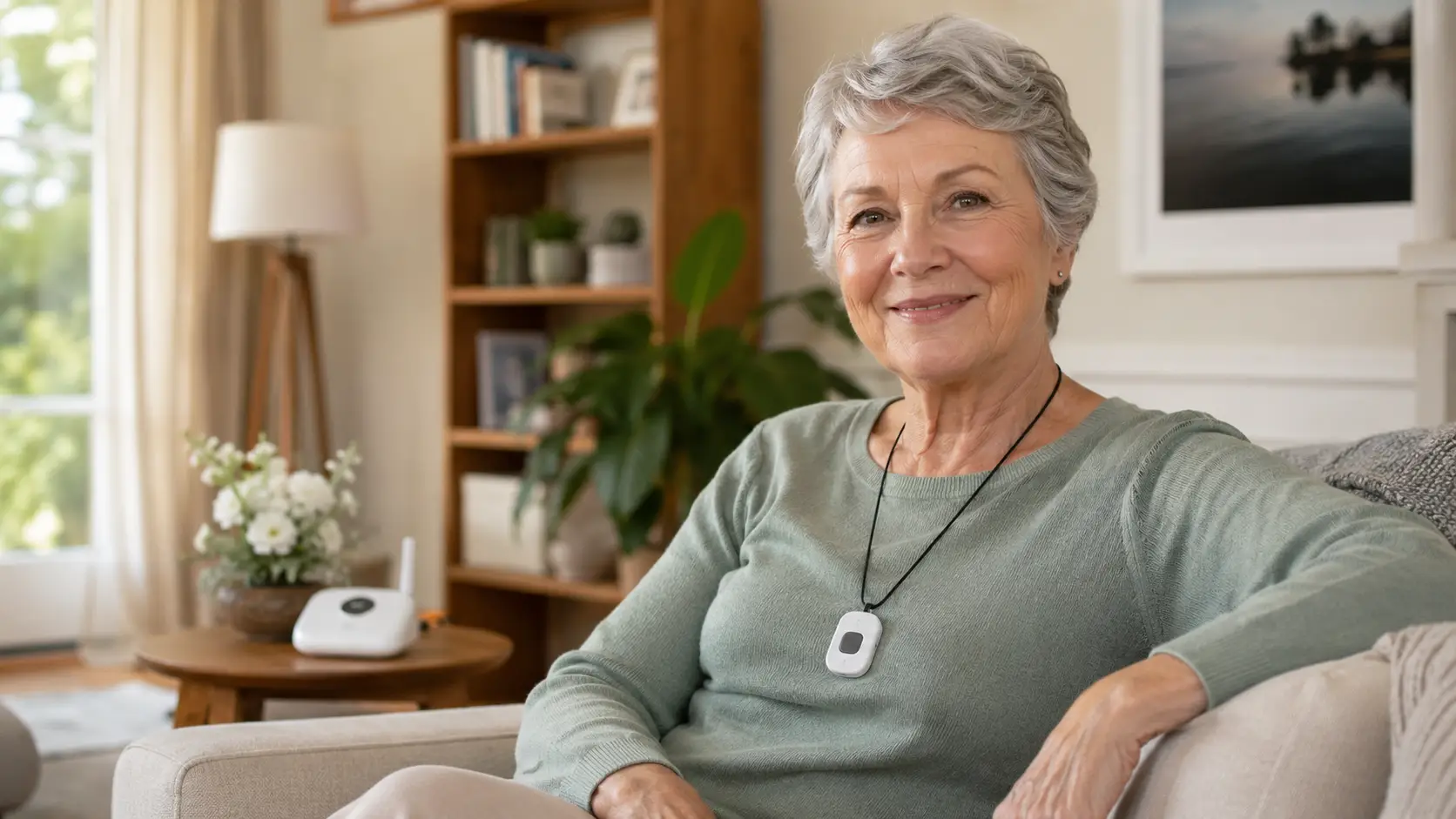
A personal emergency response system is the formal name for the help-button service many people picture as a pendant worn around the neck. Clinicians, discharge planners, and government funding programs use the term PERS because it covers more than one kind of device. Every PERS has the same three working parts. A help button, worn or fixed in place. A connection that reaches a monitoring centre. And trained operators who answer, day or night.
What separates one system from another is usually invisible in the brochure: where the monitoring centre sits, and how the operators respond. Our operators in Canada follow a personalized response plan written for each subscriber, so the person who answers already knows the pertinent care notes on file and the people to call. Two systems can look identical on paper and behave completely differently the moment the button is pressed.
PERS, medical alert, MedicAlert: the names blur together. Here is the MedicAlert vs medical alert difference in plain language.
What happens when you press the button
Most calls we take start the same way: a quiet press, then a voice from the base unit or the pendant asking if everything is alright. From there the path is short. The signal reaches our Canadian monitoring centre. An operator speaks with the subscriber through the device’s two-way speaker. If the person answers and only needed a hand getting up, the operator ensures the right care is summoned. If there is no answer, or the subscriber asks for help, the operator works down the response plan, reaching a neighbour or family member where that is the right call, and emergency services when the situation needs them.
The reason the plan is written in advance is simple. Nobody should have to explain anything in the worst moment. The information is already sitting in front of the operator.
Who needs a PERS, and when
A personal emergency response system is most often arranged at a moment of change. A fall, a hospital stay, a new diagnosis, or the quiet realization that a parent is now living alone. Falls are the leading cause of injury-related hospitalization among Canadian seniors, according to the Public Health Agency of Canada, and many of them happen at home, which is why discharge planners raise the subject before a patient goes back to an empty house. The systems also help people living with early dementia who may wander, where a locating device gives family a faster way to find someone.
The main types of PERS in Canada
Bedford runs five streams, and four of them are built for private homes.
An in-home system is for someone who spends most of the day at home. Our Home Freedom service pairs a base unit with a waterproof help button you can wear in the shower, a common place for falls.
A mobile GPS pendant works for an active senior who walks, gardens, or takes transit. The Go Anywhere Pendant operates wherever there is cellular coverage and can share a location with the monitoring centre.
A wrist device makes sense for a person who will wear a watch but not a pendant. The Go Anywhere Watch puts the same help button on the wrist.
Non-wearable radar is for someone who forgets or refuses to wear anything. Silver Shield uses radar-based sensing to recognize a possible fall with nothing worn on the body. Like any fall technology, it is designed to assist and is not a guarantee that every fall will be detected.
The fifth stream, Nurse Call, is built for retirement homes and care facilities rather than private residences.
If you are weighing one type against another, our walkthrough on how to choose a medical alert system in Canada sets them side by side.
Not sure which type of personal emergency response system fits your situation? Talk it through with our Canadian team before you decide. Call 1-888-755-3055 and we will walk you through the device options, the funding paperwork, and Easy Setup, with no pressure and no long-term contract.
Who helps pay for a PERS in Canada
This is the part discharge planners ask about most. Bedford’s services are funded or approved under a range of third-party programs, from some Blue Cross plans to veterans’ and community programs, and Bedford is as likely as any other provider to qualify. What each program covers, and who qualifies, depends on the program and the individual’s plan. The practical step is to ask your program or plan directly what it covers, and to ask us what paperwork helps. Provinces run their own supports and the rules differ, so it is worth checking what is available locally.
Why the monitoring location matters in Canada
A personal emergency response system is only as good as the centre behind the button. Some of the best-known names are run from the United States, which puts the billing, the support, and the monitoring itself across a border. We cover that comparison in full in our piece on Life Alert in Canada. For this guide the practical point is shorter: a Canadian-monitored system keeps your account data and the voice on the line here at home. Bedford is an OCSA member, is recognized by clinicians including the University Health Network’s Toronto Rehab geriatric program, and is rated 4.9 stars by Canadian families.
What a PERS costs, and what to confirm before you sign
Pricing is the other early question, and it deserves a straight answer rather than a teaser. We lay out the real cost picture in what a medical alert system costs in Canada. Two things are worth confirming with any provider. First, that the equipment is included rather than sold to you separately. Second, that you are not locked into a long-term contract. Our plans typically run month-to-month after a three-month minimum at the start, and there are no cancellation fees.
Choosing the system that fits your home
A personal emergency response system is not a single product. It is a category, and the right fit depends on real life: whether your parent is mostly home or often out, will wear a pendant or prefers a watch, or needs protection that works without being worn at all. Start from how the person actually lives, then match the device to it.
If a home-based system sounds closest, our Home Freedom service is the place most Canadian families begin.
See how our in-home personal emergency response system works: a waterproof help button, 24/7 Canadian monitoring, and the equipment included. Explore Bedford Home Freedom, or call our Canadian team at 1-888-755-3055 to set it up. Recommended by doctors and hospitals, and rated 4.9 stars by Canadian families.