In Ontario, the envelope shows up in the mail up to 90 days before the licence expires. Once a driver turns 80, the licence has to be renewed every two years, and the renewal includes a vision check and a short screening exercise (Ontario, “Renew a G driver’s licence: 80 years and over”, updated June 3, 2025).
For plenty of families, that letter is the first time anyone says the word “driving” out loud.
Sometimes the renewal goes fine and nothing changes for years. Sometimes a parent decides on their own that the highway at dusk is no longer worth it. And sometimes a fender bender forces the question. However it starts, the car keys carry more than a car. They carry the Tuesday grocery run and the card game across town. This post is about keeping those things in your parent’s week after the car is gone.
What the renewal at 80 actually involves in Ontario
The Ontario program is narrower than many people fear. According to the province’s page, a driver aged 80 or older:
- watches the senior driver education video and reviews the official Drivers’ Handbook before the appointment
- has their eyesight checked by a vision screener, or brings an eye doctor’s report with complete results
- completes a five-minute, non-computerized clock-drawing exercise
After that session, some drivers are asked to take a road test or to send in medical information from their doctor. The province’s page lists these as possible next steps, not as part of every renewal.
All of this is Ontario’s rule: if your parent lives in another province, check with that province’s own licensing office instead of relying on what a friend in Ontario went through.
Fitness to drive is a question for your parent’s doctor and the licensing authority. We cannot tell you whether your mother should still be behind the wheel, and nobody writing a blog post can. What we can help with is the part that comes after.
Why losing the car hits harder than losing the drive
Statistics Canada looked at this directly. In an article by Martin Turcotte using 2009 data from the Canadian Community Health Survey, Healthy Aging, seniors whose main way of getting around was driving their own car were the most likely to have taken part in a social activity in the previous week, at 73%. Among people who mainly rode as passengers and had no licence, the figure was 53%. Among those who relied on accessible transit or taxis, it was 46% (Statistics Canada, “Profile of seniors’ transportation habits”, Canadian Social Trends, January 23, 2012).
The same article found a wide gap between men and women at the oldest ages. In 2009, 67% of men aged 85 and over living in private households had a driver’s licence, compared with 26% of women.
Two caveats on that source. StatCan has archived the article, and its numbers are from 2009, so the exact percentages may have moved. The pattern is easy to recognize, though. The article points to studies finding that people who depend on others for transportation are more reluctant to ask for a ride to leisure activities than to ones seen as more essential. When the car goes, medical appointments tend to get covered first, because everyone agrees they matter. The coffee with a friend has nobody assigned to it, so it quietly drops off.
That is worth planning for on purpose.
Bringing it up: start with one drive, not with age
If you are the one raising the subject, begin with something specific, not with your parent’s age. Ontario’s guide for seniors lists questions a driver can ask about their own driving, among them whether there have been several fender benders and near misses, and whether they have ever become lost behind the wheel. One real moment like that gives the two of you something concrete to talk about. “You’re too old to drive” gives your parent something to defend.
We have written a full guide on how to talk to a parent about a medical alert, and the same approach carries over to the car: let your parent make as much of the decision as possible, and come back to it more than once. We will not repeat that whole guide here.
One practical suggestion. Before the conversation, write down every regular trip your parent makes in a normal week. That list turns a painful talk about losing something into a working session about how each trip will still happen.
Building the week again, one trip at a time
Take the list and match each trip to an option. Ontario’s guide to programs and services for seniors (updated August 10, 2026) names several. Other provinces run their own versions, so check locally:
- Specialized transit. Services such as Toronto Wheel-Trans, Ottawa’s Para Transpo and Windsor’s Handi-Transit use smaller vehicles with a lift or ramp. Ask each service how to apply, and do it early, not the week the car is sold.
- GO Transit senior fares. Riders 65 and over pay a reduced fare on GO trains and buses with a PRESTO card.
- 211 Ontario. Dial 2-1-1 and ask for community organizations that provide transportation for seniors. It is a good first call when you are looking for a local volunteer driver program.
- Volunteer drivers. The guide points to the Canadian Red Cross, Royal Canadian Legion branches and Seniors Active Living Centre programs, depending on the community.
- Taxis and ride-share. The guide also mentions pre-paid taxi vouchers and pick-ups from some seniors’ residences.
Then there is family. A shared calendar with the standing trips on it, and a named person for each one, works better than “call me whenever you need a ride.” Some parents will not call. They do not want to be a bother, so they skip the errand.
Delivery fills some gaps too. Groceries and prescriptions can come to the door. A haircut and a visit with a sister cannot, so keep those on the calendar.
If your parent wants to keep driving a little longer while the plan comes together, CAA’s national site has a page of refresher courses and seminars for senior drivers, listed for four provinces when we read it (Ontario was not one of them), and Ontario’s guide points to the Canada Safety Council and the 55 Alive Driver Refresher Course. A course is not a medical assessment. It can help someone drive more comfortably for the time they have left behind the wheel.
Is your parent getting around on foot and by transit more often now? Call our care team at 1-888-755-3055 for a complimentary consultation by phone. Tell us about the usual routes and who should be called first, and we will talk through whether a mobile medical alert fits the new routine.
More of the week now happens on foot
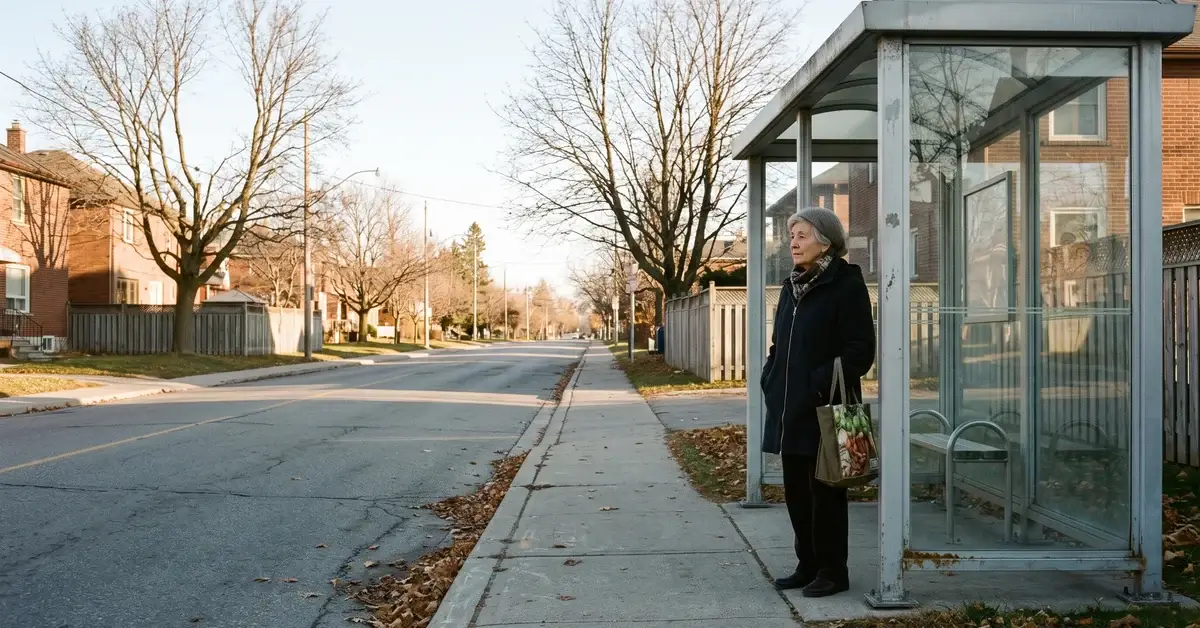
Here is the part families do not always see coming. A parent who used to drive door to door now walks to the bus stop, waits outside in January and crosses a parking lot carrying grocery bags. Much of that is done alone.
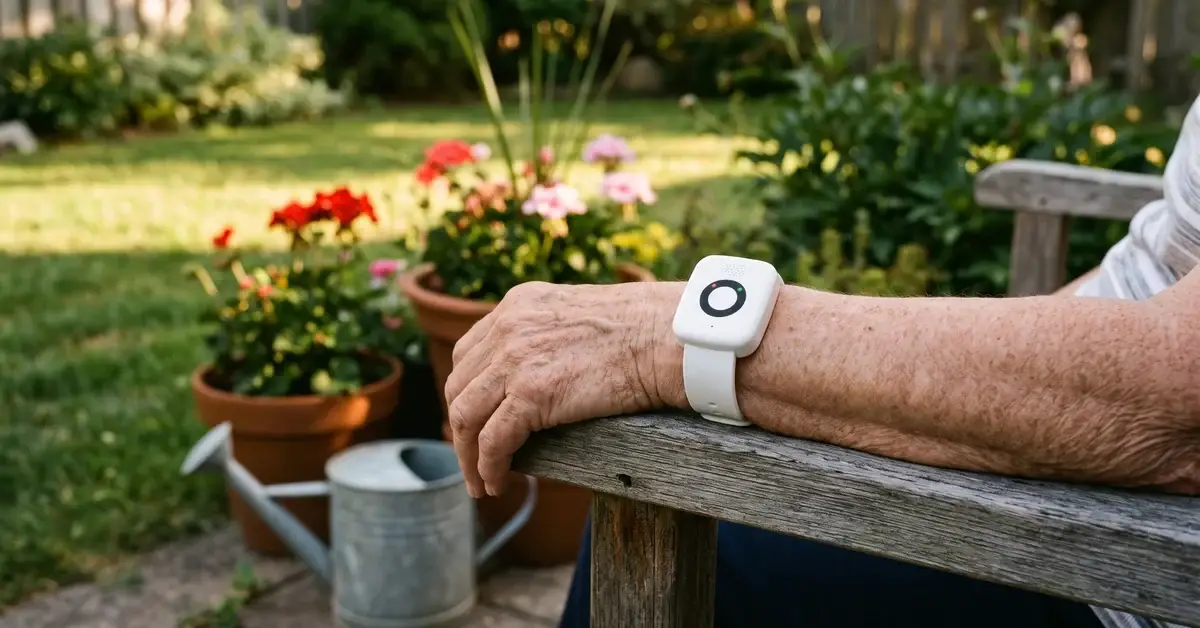
An in-home system only covers the home. Our Go Anywhere Pendant is built for the rest of it. It uses LTE cellular and GPS, so it works anywhere in Canada where cellular coverage is available, with no landline or base unit needed. Pressing the button opens a two-way voice call through the pendant itself to our 24/7 monitoring centre here in Canada.
When the call reaches us, the operator sees the best location estimate the device can provide, and our page on how GPS medical alert devices find you explains how GPS, Wi-Fi positioning and cell towers each contribute. It is just as clear about the limits. GPS works best outdoors with a clear view of the sky, and coverage depends on available cellular and GPS signal.
The Go Anywhere Pendant can also include automatic fall detection, which is designed to place a call when the device senses a fall. No sensor on the market catches every fall, so the button stays the main way to ask for help.
Two details matter for a parent who has just lost the car. The pendant is water-resistant, so it can stay on in the shower. And when the battery runs low, it announces out loud that it needs charging, which is easier to act on than a blinking light. Charging it on the nightstand at the same time each evening turns that into a habit.
One more point on the Go Anywhere Pendant: it is not recommended for someone with a pacemaker. Depending on the model, it may have built-in magnets, and we will provide you with the specifications, which you may share with your cardiologist.
Write the plan down while it is fresh
Once the trips are sorted, put the plan on paper: who drives to which appointments, the volunteer program’s phone number, the transit booking line, and the names of two neighbours. Tape a copy inside a kitchen cupboard and keep one yourself. It belongs alongside the other arrangements we cover in planning ahead for aging parents.
If you add a Bedford Medical Alert® device to that plan, the same thinking applies to the response plan we keep on file. You choose the contacts and the order they are called. Someone who lives five minutes away should probably be near the top now that your parent cannot drive over to them.
A few facts about how we work, since families ask. Bedford is Canadian-owned and operated, and we are a member of the Ontario Community Support Association (OCSA). Equipment is included with the subscription. Plans typically run month to month after a three-month minimum at the start, with optional six or twelve month initial terms if the savings suit you. Service reverts to month to month afterwards, and there are no cancellation fees.
Giving up the car is a real loss, and it is fair to treat it as one. The aim of all this planning is simple: the week still has the same people and places in it, and the trips between them are covered.
Ready to cover the walk to the bus stop? See how our Go Anywhere mobile medical alert systems work anywhere in Canada with cellular coverage, or call 1-888-755-3055 to talk it through with our care team.
Sources (read on 12 November 2026)
- Government of Ontario, “Renew a G driver’s licence: 80 years and over” (updated June 3, 2025): ontario.ca
- Government of Ontario, A guide to programs and services for seniors, “Driving and transportation” (updated August 10, 2026): ontario.ca
- Statistics Canada, Martin Turcotte, “Profile of seniors’ transportation habits”, Canadian Social Trends no. 93, catalogue no. 11-008-X, released January 23, 2012 (archived page; Canadian Community Health Survey, Healthy Aging, 2008 and 2009): statcan.gc.ca
- CAA National, “Refresher Courses” (page last modified June 2, 2022): caa.ca
- Bedford Medical Alert, the Go Anywhere and GPS location pages linked above (device features as published on the day of reading)