Most of the calls we take start after a scare. A fall in the hallway, a hospital discharge, a daughter in another province who could not reach her father for two days. In those conversations families often say some version of the same thing: everything about getting old in this country is getting worse.
Some of it is. Some of it is measurably better, and the improvements are large enough that they change how a family should plan.
What follows is what Canada’s national data actually records, with the publisher and the reference year attached to every figure. Where the picture is good, we say so. Where it has gone backwards, we say that too.
Canadians who reach 65 are living longer, though the pandemic gap has not closed
Statistics Canada’s “Deaths, 2023” release, published on 4 December 2024, put life expectancy at age 65 at 19.6 years for men and 22.2 years for women. Both figures rose that year, by 0.5 years for men and 0.3 years for women.
The longer view is more complicated. Life expectancy at birth climbed from 81.3 years in 2022 to 81.7 years in 2023, the first increase after three consecutive annual declines. It still sat 0.5 years below the 2019 figure of 82.2 years. Statistics Canada says the 2023 gain was driven by falling mortality among adults aged 50 and over.
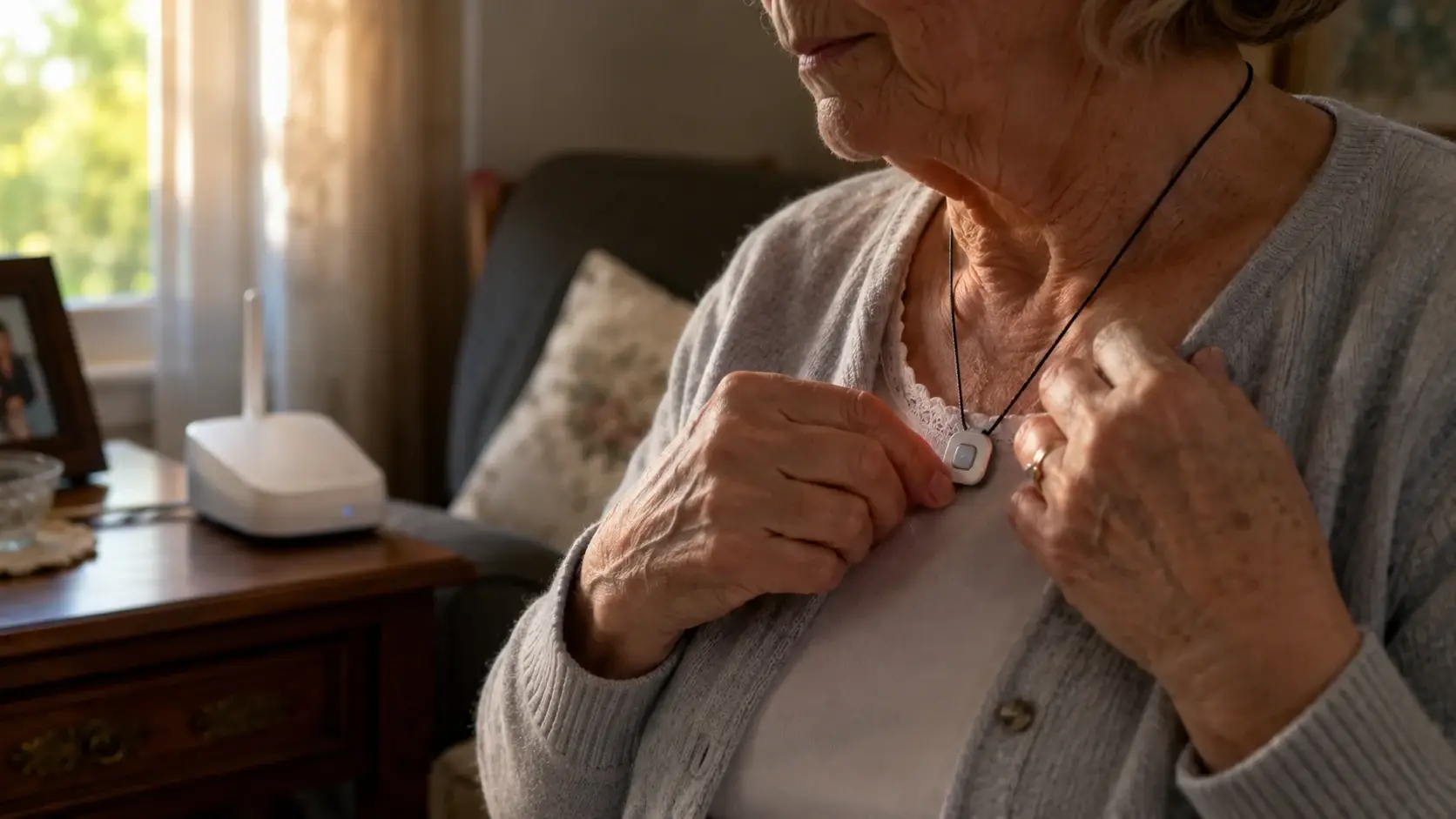
For a family, the practical meaning is the length of the planning horizon. A woman who turns 65 this year is, on average, planning for another 22 years. That is the span Bedford Medical Alert® equipment is installed against. We are Canadian owned and operated, with monitoring staffed in Canada around the clock.
Seniors now have the lowest poverty rate of any age group in Canada
This is the finding that surprises families most, and it is not close.
Statistics Canada’s Canadian Income Survey for 2024, released on 29 April 2026, put the poverty rate for Canadians aged 65 and older at 5.4%, down 0.5 percentage points from 2023 and falling for a second consecutive year. Over the same period the rate for adults aged 18 to 64 was 12.6%, and for children under 18 it was 11.5%.
Median after-tax income moved with it. Senior families, meaning those where the highest earner is 65 or older, recorded $83,200 in 2024, up 2.3%. Unattached seniors recorded $38,600, up 3.5%, after a 3.9% rise the year before.
Food insecurity follows the same pattern. In 2024, 24.0% of Canadians lived in households reporting some form of food insecurity. Among senior couples the figure was 7.1%, and among senior families 9.9%.
The gains are not evenly spread. Unattached seniors, meaning those living alone or with people they are not related to, carried a poverty rate of 11.1% in 2024, roughly double the rate for seniors overall, even after falling from 12.5% the year before. People in senior families sat at 4.0% and did not move. Unattached seniors also reported food insecurity at 13.0%, against 7.1% for senior couples.
The household most likely to be financially stretched is the one most likely to be living alone. It is also, in our experience, the household that most often delays getting a monitored device because it looks like another fixed monthly cost. That is one reason Bedford does not use long-term contracts. Plans run month to month or annually at the customer’s choice, equipment is included with the subscription rather than sold separately, and there are no cancellation fees. If you are working through the wider arithmetic of supporting a parent, our post on the cost of caring for elderly parents in Canada covers the family-finances side in detail. The figures in this section are published statistics, not financial or legal advice.
Not sure which setup fits your household? Call us at 1-888-755-3055 and speak with a Canadian advisor. We will ask about the home, the routine, and who should be called first, then tell you plainly which of our systems fits and which does not.
The system is doing more procedures than it did before the pandemic
CIHI’s report “Wait times for priority procedures in Canada, 2025”, published 12 June 2025, compares 2024 with 2019. Across Canada in 2024 there were 26% more hip replacements, 21% more knee replacements, 11% more cataract surgeries, 7% more cancer surgeries, and 16% more MRI and CT scans completed than in 2019.
That is a genuine increase in volume against an older and larger population.
We notice it from the other end. A hip or knee replacement sends someone home with reduced mobility for weeks, and the first fortnight back in the house is when families call us. Bedford has supported hospital education programs and research initiatives from UHN Toronto Rehab to Trillium Health, and discharge planners remain one of our steadiest referral sources, because the gap they worry about is the one between the ward and the follow-up appointment.
Where it went backwards: how long people wait
The same CIHI report carries the other half, and the two halves are easy to confuse.
In 2024, 83% of patients received hip fracture repair within 48 hours, and 94% received radiation therapy within 28 days. Both figures were 3 percentage points lower than in 2019.
Hip replacements were completed within the recommended six months for 68% of patients and knee replacements for 61%. Both improved on recent years, and both remained below their 2019 levels. Cataract surgery met the recommended 112 days for 69% of patients.
Diagnostic imaging slipped further. Median waits rose by 15 days for MRI scans and 3 days for CT scans between 2019 and 2024. Median waits for most cancer surgeries rose by 1 to 5 days, with prostate cancer surgery up 9 days.
CIHI’s next release, “Wait times in Canada, 2026”, published 25 June 2026, moves part of that picture. It reports that waits for cataract surgery and for urgent treatments such as hip fracture repair and radiation therapy have largely returned to pre-pandemic levels, that joint replacement waits are approaching them, and that waits for most cancer surgeries remain longer than before the pandemic while delays in diagnostic imaging persist. The recovery is real for the urgent procedures. It has not reached the scans or the cancer surgeries.
More procedures, and for the scans and the cancer surgeries, performed later. For a senior living alone, the interval that matters is the one spent waiting at home with a mobility problem that has not yet been fixed. That is the exact window a monitored device is for, and it is why we ask about stairs and bathrooms during the sizing call rather than after.
Where it went backwards: dementia
The Public Health Agency of Canada’s surveillance fact sheet on dementia, published in 2017 using Canadian Chronic Disease Surveillance System data, covers 2003-04 through 2013-14. Over that ten-year period the age-standardized prevalence of diagnosed dementia among Canadians 65 and older rose 21.2%. Among women it moved from 6.0% to 7.3%, and among men from 5.0% to 6.1%.
At the end of that window more than 402,000 Canadian seniors were living with diagnosed dementia, a prevalence of 7.1%, about two thirds of them women, with roughly 76,000 new diagnoses a year. The data excludes Saskatchewan.
Two caveats belong with those numbers. PHAC notes that surveillance figures may also reflect changes in data collection, coding and billing practice, not only changes in population health. And this is the oldest dataset cited on this page, so treat it as the direction of travel rather than today’s count.
One finding in it is easy to miss. All-cause mortality fell for Canadian seniors generally between 2003-04 and 2013-14, but fell more slowly for those with dementia, so the gap between the two groups widened rather than narrowed.
On the practical side, memory change is the situation where a standard pendant setup most often stops working, because the device only helps if it is worn. Bedford’s answer is to keep the device simple and let family assist through a caregiver app, and for households where nothing wearable is realistic, our Silver Shield system uses non-wearable radar sensing mounted in the room instead. We describe what these systems do in general terms and never guarantee that any particular event will be detected.
Falls sit in both columns
Falls are the one area where the national picture deserves its own treatment rather than a paragraph here. We have already set out the graded evidence on what reduces fall risk, and what the research does not support, in our post on what actually prevents falls. Start there rather than here.
What the numbers should change about planning
Read together, the data points in one direction. Canadian seniors are living longer after 65, and on Statistics Canada’s poverty measure they are the best-placed age group in the country. The health system is performing more procedures, and for scans and cancer surgery it is still making people wait longer for them. The share living with dementia has been climbing.
The practical consequence is that the risky interval is no longer only the emergency itself. It is the stretch of waiting around it: waiting for the scan, waiting for the surgery, recovering at home afterwards, with a longer life expectancy meaning more such intervals over more years.
Two things we tell every caller. Pressing the button by accident carries no penalty and no charge; you simply speak with our team and confirm you are all right. And we actively encourage testing the device, because a system nobody has ever tried is a system nobody trusts.
If you want the longer view on staying in your own home safely, our guide to aging in place in Canada covers the household side, and why families choose Bedford sets out how our monitoring and terms work.
If the person you are planning for spends most of their time at home, our Home Freedom in-home system pairs a base unit with a wearable button and connects to Canadian monitoring staffed 24 hours a day. Equipment is included, there is no long-term contract, and there are no cancellation fees. Call 1-888-755-3055 and we will tell you honestly whether it suits the household.