In 2018 the US Preventive Services Task Force told clinicians not to use vitamin D supplements to prevent falls in adults over 65. In its update of 4 June 2024 the Task Force removed the question from the falls guideline altogether, and the review meant to settle it is still listed as in progress.
Vitamin D sits on almost every fall prevention list you will find, usually somewhere near the bottom, formatted exactly like the items above it.
Those lists rarely tell you that the items carry very different weights of evidence. The bodies that assemble this research grade their own confidence in it, item by item, and publish the grades. Some of what gets repeated as settled is graded strong. Some of it is graded weak. One piece of it has been withdrawn and not yet replaced.
Bedford Medical Alert® is a monitoring company. We are called after a fall, not before one, and nothing in this ranking sells a product of ours. That is a reasonable position from which to write it down plainly.
What the grades mean before we use them
Two organisations do most of this work.
The US Preventive Services Task Force issues letter grades to clinicians. B means offer this. C means the net benefit is small enough that it should be an individual decision. D means do not offer it. I means the evidence is insufficient to say either way.
Cochrane, an international research network, pools the trials and attaches a certainty rating to each result: high, moderate, low or very low. High certainty means more research is unlikely to move the number much. Low certainty means it could move a great deal.
The distinction that matters for a family reading a list is between a finding that is strong and a finding that is merely popular.
Exercise is the item graded strong, and the type matters
The largest synthesis is a 2019 Cochrane review by Sherrington and colleagues, covering 108 randomised trials and 23,407 people living in the community across 25 countries.
Exercise of any kind reduced the rate of falls by 23% and the number of people who fell at least once by 15%. Both of those are rated high certainty, which is as firm as this field gets.
The review then separates the types, and they do not perform alike.
Balance and functional exercises, meaning the work that trains standing, turning, reaching and getting out of a chair, reduced the rate of falls by 24%, also at high certainty. Programmes combining several types, most often balance and functional work plus resistance training, reduced the rate by 34%, though at moderate certainty because fewer trials tested them. Tai chi reduced the rate by 19% at low certainty.
The Task Force reached the same destination by its own route, grading exercise interventions B for adults 65 and over at increased risk of falling in its June 2024 statement.
One finding in that review deserves more attention than it gets. The Cochrane authors wrote that they are uncertain of the effects of programmes that are primarily resistance training, or dance or walking programmes, on the rate of falls. Walking is genuinely good for a person. The evidence that walking on its own prevents falls is not there yet, and a walking habit is not a substitute for balance work.
Wondering what a fall would actually mean for someone living alone? Call Bedford at 1-888-755-3055 and ask how monitored response works. Our Canadian team will walk you through it without a sales script.
Where the advice runs ahead of the evidence
The standard recommendation for someone at high risk is a multifactorial assessment: a clinician reviews balance, medications, vision, blood pressure and the home, then builds a personal plan. It sounds obviously superior to any single measure.
The Task Force graded it C. Its 2024 statement puts the reason in one sentence, that the overall net benefit of routinely offering multifactorial interventions to prevent falls is small. The recommendation is to individualise the decision rather than offer it as a matter of course.
This is worth sitting with, because it contradicts a line that appears on a great many fall prevention pages, including one of our own until this week. Doing more things is not automatically better than doing the one thing that works. The graded evidence puts structured balance and strength work first, and treats the full assessment as a judgement call for a clinician who knows the person.
Medication review is the branch of that assessment with the clearest logic behind it, since the mechanism is direct and the fix is often a conversation with a pharmacist. We keep a separate page on medications that increase fall risk in seniors rather than compressing it here.
The vitamin D question, told straight
Here is the full sequence, because the short version gets garbled.
In 2018 the Task Force’s falls guideline recommended against vitamin D supplementation to prevent falls in community-dwelling adults 65 and over. In the same year, in a separate statement on fractures, it recommended against daily supplementation with 400 IU or less of vitamin D combined with 1000 mg or less of calcium for primary fracture prevention in community-dwelling postmenopausal women, and concluded that the evidence was insufficient to judge higher doses, or to judge men and premenopausal women at all.
In June 2024 the falls guideline dropped the vitamin D question entirely, stating that the evidence would be reviewed in a separate recommendation. That combined review, covering both falls and fractures, is listed on the Task Force’s own topic index as in progress. As of today it has not been published.
So the honest position is not that vitamin D has been proven useless. It is that the last published guidance specific to falls advised against it, the question has since been reopened, and no replacement conclusion exists yet.
None of that is advice about whether you personally should take vitamin D. Correcting a deficiency is a different clinical question from preventing a fall, and it is one for your own doctor or pharmacist, who can test for it and who knows what else you take. Ask them. Do not take a blog post, ours included, as a reason to start or stop anything.
What none of these studies measure
Read the strongest number in this post again. Exercise reduced the rate of falls by 23%.
Not to zero. The best-supported intervention in the field, tested across a hundred trials, leaves most of the risk in place. Someone who does everything on the graded list correctly can still end up on a kitchen floor.
That gap is the whole reason our business exists, and it is where we stop reporting other people’s research and tell you what we see. The danger for a person living alone is often not the fall itself but the time spent on the floor afterwards, which has its own literature summarised on our page about the long lie after a fall. The Canadian figures on how often falls happen, and to whom, are collected with their sources on our seniors’ falls in Canada statistics page.
Automatic fall detection helps in the case where a person cannot press a button. It is a backup rather than a guarantee, and no sensor on the market catches every fall. Prevention and response are answers to two different questions, and a household that takes the first one seriously still benefits from the second.
Where a family can reasonably start
Nothing in the graded evidence points toward a purchase. It points toward a referral.
The intervention with high-certainty support is structured balance and functional exercise, which usually means asking a family doctor for a physiotherapy referral or finding a community balance programme. Many municipalities in Canada run subsidised ones. Medication review sits close behind it, and costs a conversation. Home hazards and vision belong in the practical checklist we keep on our fall prevention at home page, which is the room-by-room companion to this one.
The vitamin D bottle is the item to ask a professional about rather than decide from a search result.
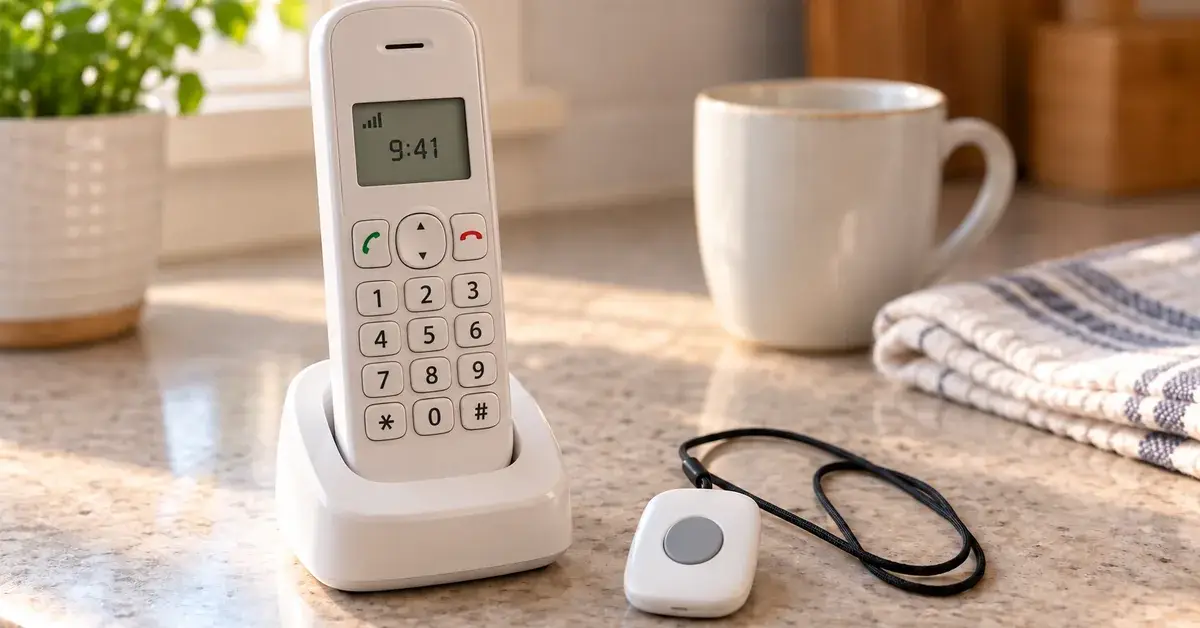
Prevention lowers the odds. It does not remove them. Bedford Home Freedom pairs an in-home base station with a wearable help button, monitored 24/7 from Canada, with no long term contract and the equipment included. We hold a 4.9 star rating on Google. Call 1-888-755-3055 or see the Home Freedom system to talk it through.