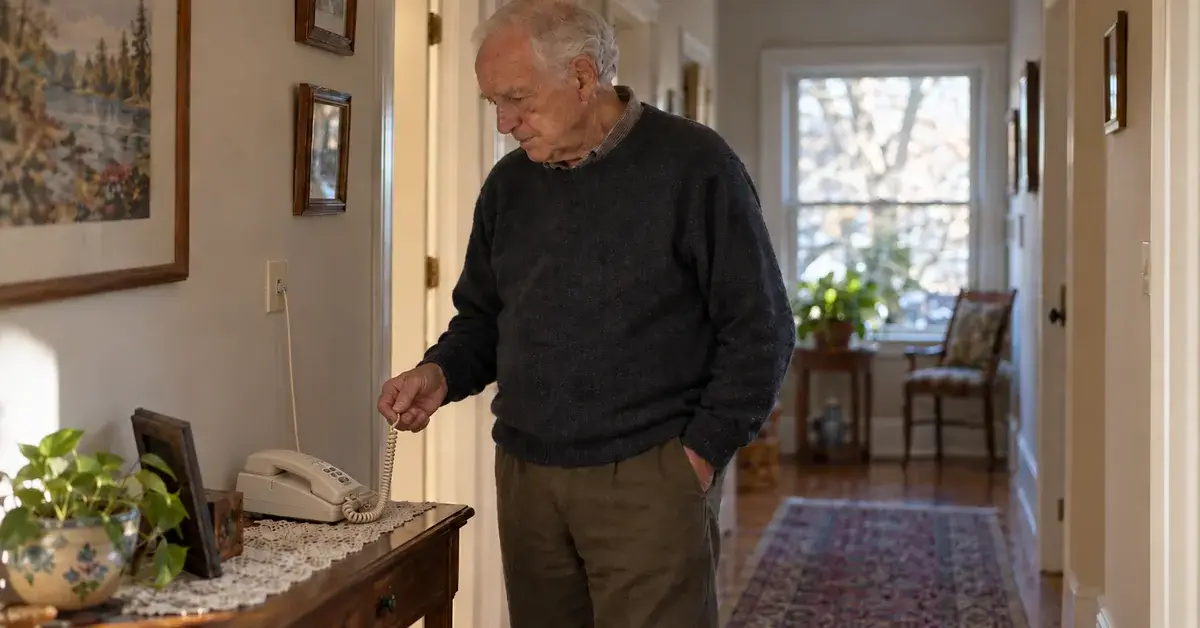
There is a question that almost never comes up first. It arrives near the end of a call, usually from the person who will actually wear the device rather than the adult child arranging it, and it is nearly always phrased as an apology.
What happens if I press it and nothing is really wrong?
The answer at Bedford Medical Alert® fits in three sentences. You speak with our team. You tell them you are fine. That is the end of it, with no penalty and no charge.
That answer surprises people often enough to be worth a longer explanation, because the worry sitting underneath the question does real damage.
The Question That Comes Last
Notice who asks it.
Adult children arranging a system for a parent tend to ask about coverage, about monthly cost, about whether the pendant can be worn in the shower. The senior who will actually wear the thing asks something different, and they usually wait until the practical questions are finished.
They want to know whether they will be in trouble.
It is a reasonable thing to wonder about. Anyone who has filled a kitchen with smoke-alarm noise because of toast, or set off a car alarm in an underground garage, has learned that accidental alerts carry a small social cost. People reasonably assume a medical alert button works the same way. That assumption then quietly changes how they behave once the device is on their wrist or around their neck, which is the part that concerns us.
What Actually Happens After an Accidental Press
A pendant catches on a cardigan sleeve while someone is pulling it on. A wall button gets leaned on by a hand reaching for balance. A visiting grandchild finds a big shiny button irresistible.
In all three cases the sequence is identical. The base station or the mobile device opens a two way voice connection to our Canadian monitoring centre, an operator comes on the line, and they ask whether you are all right. You tell them yes. They confirm it and let you get on with your day.
That is the entire procedure. There is no fee attached to it and no change to what you pay.
Our monitoring is Canadian and staffed around the clock, so the person asking whether you are all right is not working from a script written for another country’s emergency system. If a call does turn out to be a real emergency, what follows is the response plan your household set up when the service started, and we have already written that sequence out step by step in what happens when you press a medical alert button. This post will not repeat it.
Why People Talk Themselves Out of Pressing
Here is the part that matters more than the reassurance.
Researchers have studied this directly, and the findings are uncomfortable. A 2015 study in BMC Geriatrics by McKenna and colleagues spoke with thirty Ontario subscribers over eighty, in focus groups and interviews, about how they decide whether to press. What came back was not confusion about the equipment. It was a running internal negotiation. Is this bad enough. Will I look foolish. Can I manage on my own for another minute or two.
Porter’s 2005 work in the Journal of Gerontological Nursing gave that behaviour a name, temporizing, and described pressing as a judgment call rather than a reflex.
Bedford’s own review of the research on personal emergency response systems, which we summarised at do medical alert systems work, reached a blunt conclusion about what that judgment call costs. The evidence supporting these devices rests almost entirely on whether they are worn and actually used. A button nobody presses is jewellery.
Hesitation is the failure mode we worry about. A false alarm is not.
We Would Rather You Pressed It on Purpose
Bedford actively recommends testing your device. That is a real recommendation and not a line buried in a manual.
Pressing the button deliberately, when nothing at all is wrong, is genuinely useful. It confirms the device is charged and connecting. It puts a voice from the monitoring centre into your living room while you are standing up and calm, rather than the first time you hear it being a moment when you are on the floor and frightened. Familiarity is most of what turns a device into something a person will use under stress.
Tell the operator you are testing. They confirm the connection, and you are done.
If you want to know how often to do this, ask us directly rather than guessing from a blog post. It is a short conversation and we would rather have it than have you wondering.
How a test call goes, and what one press actually checks, is on how to test a medical alert system.
Not sure whether your current device is connecting the way it should? Call Bedford at 1-888-755-3055 and ask about a test call. Our Canadian monitoring team can talk you through it on the phone.
When an Automatic Alert Goes Off and Nobody Pressed Anything
Devices with automatic fall detection introduce a second kind of false alarm, one where no one pressed a button at all.
Fall detection works by watching for the motion signature of a fall in general terms, a sudden change followed by stillness. Sitting down heavily, dropping onto the edge of a bed, or a device sliding off a side table can produce a pattern that resembles it. When that happens, the device opens the same voice connection, and the same short conversation follows.
No sensor on the market catches every fall. The same sensitivity settings that let a sensor miss some real falls will also let it flag some events that were not falls, and any company that describes its detection as flawless is overselling it. Automatic detection is a backup for the situation where you cannot press, not a substitute for pressing.
Working out which situations genuinely warrant a press is a separate question with a longer answer, and we covered it in when to press a medical alert button.
Who Answers, and What They Already Know About You
Part of what makes a false alarm harmless is who is on the other end of it.
Bedford is Canadian owned and operated, and our monitoring runs 24/7 from Canada. The operator who answers already has your response plan in front of them: who gets called, in what order, what somebody arriving at the house needs to know. That plan is built with your family when the service is set up rather than assembled in the middle of an emergency.
Bedford brings three generations of experience in related fields. We are a member of the Ontario Community Support Association, and we have supported hospital education programs and research initiatives from UHN Toronto Rehab to Trillium Health. Our Google rating is 4.9 stars. The longer version of why families pick us sits on our why us page.
There are no long term contracts. Plans typically run month to month after a three-month minimum at the start, and the equipment is included with the subscription rather than sold to you separately.
Wear It, and Use It
The button is not a limited resource that has to be rationed.
Press it when you are worried. Press it when you are not certain. Press it on purpose to test it. If it goes off in your pocket on the bus and you are perfectly fine, say exactly that and carry on with your afternoon.
The device only does its job for people who are willing to use it imperfectly. Everything about how we handle an accidental press is designed around making that easy, because the alternative, a person lying on a kitchen floor deciding whether their situation is serious enough to justify the fuss, is the outcome the whole service exists to prevent.
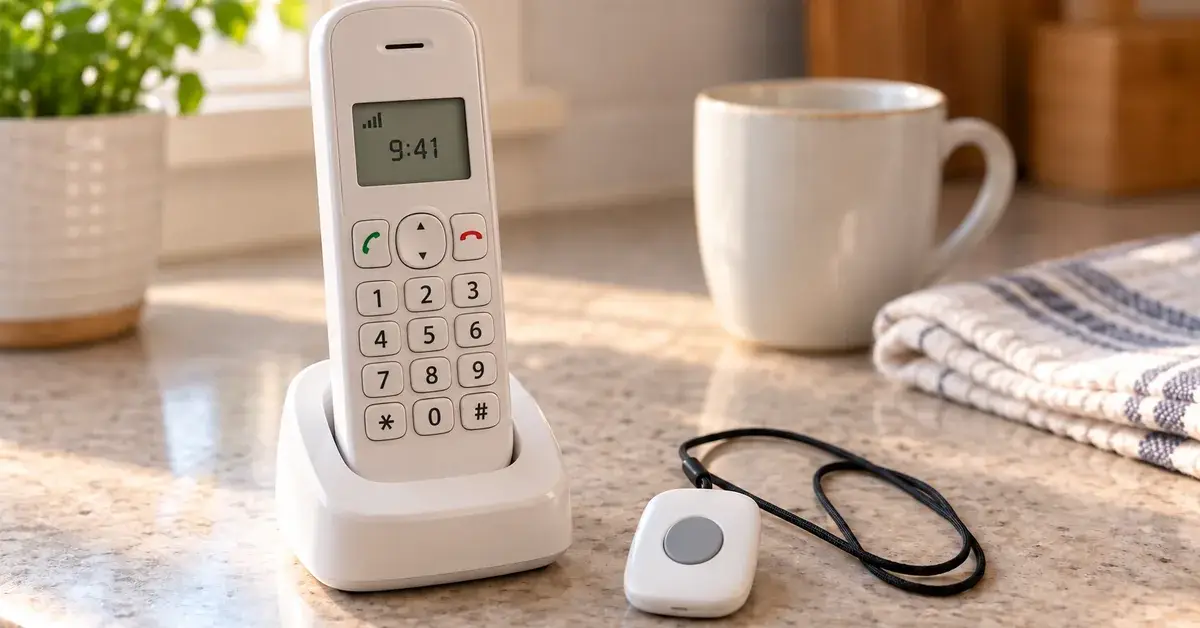
Ready to talk about a system for yourself or a parent? Bedford Home Freedom pairs an in-home base station with a wearable help button, monitored 24/7 from Canada, with no long term contract and the equipment included. Call 1-888-755-3055 or see the Home Freedom system to get started.