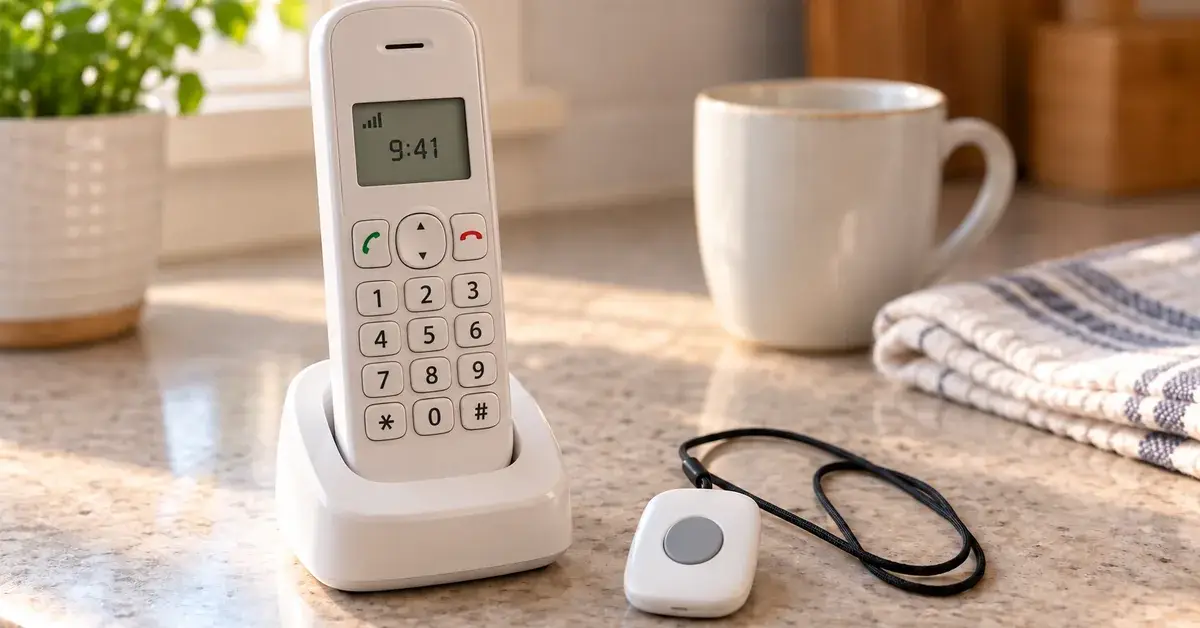
A fall detection device is a sensor that can call for help on its own. If it senses the motion pattern of a fall, it can start a call for help even when the person cannot press their button. That is the whole idea, and it matters in Canada because, according to the Public Health Agency of Canada, falls are the leading cause of injury-related hospitalization among older adults. Bedford Medical Alert® builds fall detection into devices designed for Canadian homes and Canadian conditions, backed by monitoring based here at home.
One plain fact belongs up front, because it is the one the marketing in this category tends to bury: no sensor on the market catches every fall. Fall detection is a valuable backup for the moments when someone is unconscious or too hurt to press a button. It works best alongside the help button, not as a replacement for it.
What the research really shows
Three findings from the falls research shape how we think about these devices.
First, the most dangerous part of a fall is often the wait afterward. Researchers call it the “long lie”: falling, being unable to get up, and staying on the floor for an hour or more. In a British Medical Journal study by Wild, Nayak and Isaacs (1981), half of the people who lay on the floor for more than an hour died within six months. A New England Journal of Medicine series (Gurley, 1996) that followed people found helpless in their homes reached the same conclusion from the other direction: the longer someone waits for help, the worse the outcome. The hours on the floor do much of the damage, not just the fall itself.
Second, help buttons go unpressed. In a BMJ cohort of people in their 90s (Fleming and Brayne, 2008), most falls happened while the person was alone, and call alarms, though widely available, went unused in most of the falls that ended in a long lie. People do not want to make a fuss. The button sits on the dresser at night or comes off in the shower. Automatic fall detection exists because of this finding. It is the industry’s answer to the button that never gets pressed.
Third, detection has real limits outside the lab. When researchers tested detection algorithms against real-world falls rather than simulated ones (Bagala, 2012, PLoS One), performance fell well short of laboratory results. The line we opened with comes straight from this literature, and it is why the manual button belongs in the plan even with detection turned on.
How automatic fall detection actually works
The sensor inside the device watches for the specific combination of movement and impact that tends to accompany a fall, then a sudden lack of movement afterward. When that pattern is detected, a Bedford wearable opens a call to the monitoring centre on its own. A trained responder speaks with the person through the device, finds out what is happening, and sends the right help.
Because the technology reacts to motion, very gentle slips or slow slides to the floor are harder to catch than a hard fall, which is exactly why the manual button still matters. If you want the longer explanation of the mechanism, we wrote a plain-language guide on how automatic fall detection works.
Bedford’s fall detection options
Different lives call for different devices, so fall detection shows up across the Bedford lineup rather than in one product.
The Home Freedom fall detection pendant is the in-home option. It is worn as a pendant, connects to a base unit, offers two-way voice so the person can talk with a responder from across the home including the bathroom, and needs no home phone line or wifi to work.
For someone still active outside the house, the Go Anywhere watch and pendant add GPS and cellular, so help and an approximate location travel with them. Both offer automatic fall detection, and the watch suits people who would rather wear something that looks like a watch than a visible alert pendant. Boundary alerts can notify a family member if the device leaves a chosen safe zone, useful when wandering is a worry.
Silver Shield is for the person who simply will not wear anything. A wall-mounted radar unit watches over a room with nothing worn on the body, no camera and no microphone. It works differently from the monitored wearables above: when Silver Shield detects a fall, it alerts family or caregivers automatically, following alert protocols the family sets, rather than calling Bedford’s monitoring centre. It answers the adherence problem in the research above, the device that goes unworn.
Not sure which fits? The short which device is right for you guide narrows it down in a few questions.
Want help matching a fall detection device to your situation? Bedford’s Canadian care team can walk you through the in-home, mobile, and no-wear options with no pressure. Call 1-888-755-3055 to talk it through and start with Easy Setup.
What happens after a fall is detected
A detection sensor is only as good as what happens after it fires. This is the part that does not fit in a product spec sheet.
When a Bedford wearable detects a fall, the call goes to a monitoring centre based in Canada and is answered by a real Care Responder. Each client has a personalized response plan on file, so the responder already knows the name, the address, who to call, and what the person would want. Through the device’s two-way voice, the responder talks with the person, judges what is needed, and sends the right help, whether that is a neighbour, a family member, or emergency services. With Silver Shield, that next step belongs to the family: the system notifies the caregivers on the plan, and they decide what happens next. Either way, the sensor only starts the process. People finish it.
Built for Canadian conditions
Bedford’s systems are made for the way Canadians actually live. The in-home devices run on a Canadian cellular signal and need no home wifi, which matters in rural areas and older houses where internet is spotty. The mobile devices keep working through a Canadian winter, from a downtown condo to a property well outside town. This is not a generic overseas product relabelled for Canada. Monitoring for the wearable devices is based in Canada, the support team is here, and the equipment ships from here.
What families tell us
The reassurance is hard to describe until a family has lived with it. Here is one Google review from a family member:
“My family has been extremely satisfied with the Bedford Medical Alert provided to our mother. We felt complete peace of mind knowing if mom ever fell, she would get help quickly. Thank you for the years you provided mom excellent service.” (Vikki M., Google review)
That peace of mind, the worry having somewhere to go, is what fall detection is really for.
No long-term contract
Choosing a device for someone you love is hard enough without being locked in. Bedford plans typically run month-to-month after a three-month minimum at the start, with optional savings on a longer initial term. Service reverts to month-to-month after that, and there are no cancellation fees. Equipment is included with the subscription, so there is nothing separate to buy.
Ready to add fall detection at home? Bedford Home Freedom pairs a fall detection pendant with 24/7 Canadian monitoring, two-way voice, and no long-term contract. Call 1-888-755-3055 to speak with our Canadian care team and start with Easy Setup.