Families ask this one early, usually right after “does she need a cell phone?” and right before “what if the power goes out?” The short answer is no. The monitored devices Bedford Medical Alert® supplies call for help over a telephone line or a cellular network. None of them needs home internet or Wi-Fi to reach an operator.
The longer answer is worth five minutes, because “the internet” has crept into a lot of Canadian homes under other names, and because one Bedford product does use Wi-Fi, on purpose, for a different job.
Three connections, and what each one is for
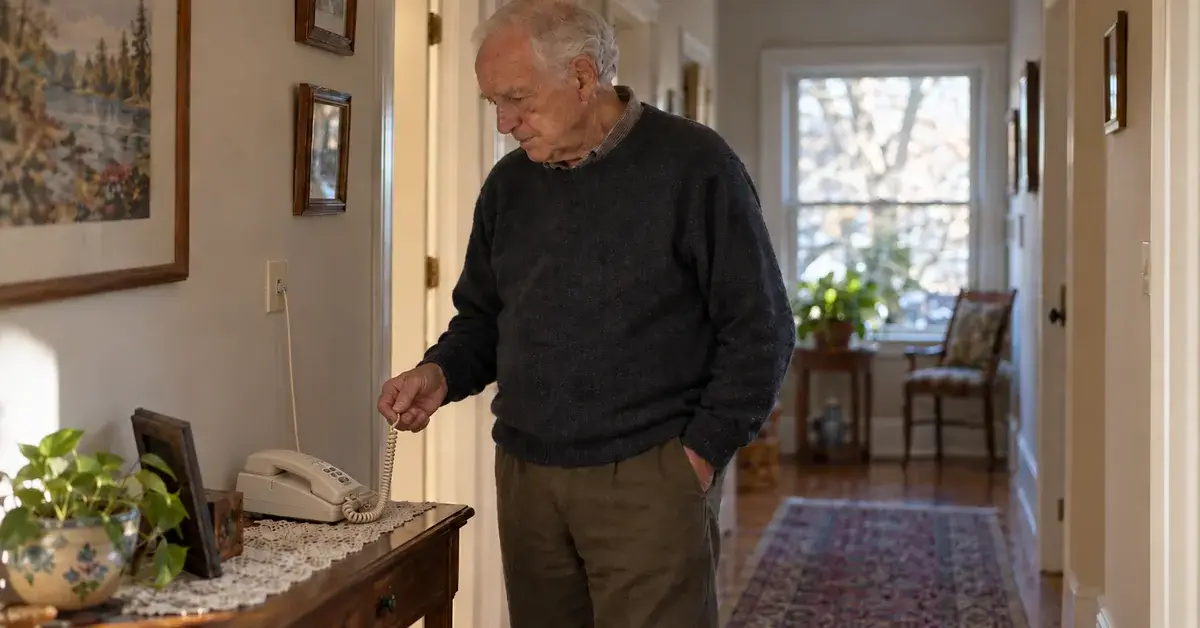
A phone line. The traditional base unit plugs into the home phone jack and dials out the way a telephone does. On a true copper landline, no internet is involved. If the home phone arrives through an internet modem or a cable box, the service is VoIP, and a landline unit plugged into it is riding on the household’s internet connection whether anyone thinks of it that way or not. That is the one place the internet enters the picture, and it is the phone service doing it, not the alert system.
A cellular network. A cellular unit carries its own small radio and SIM card, in the base station or in the wearable itself, and places the call over the mobile network the way a basic cell phone would. The house needs no phone service and no internet. The wearer needs no cell phone and no plan, because the connection is built into the device and included in the service.
Wi-Fi. The home’s own wireless network, which only goes as far as the walls. It is the right tool for apps and in-home sensors. It is not how any Bedford device reaches the monitoring centre.
Which Bedford device uses which
Home Freedom, the in-home system, pairs a wearable help button with a base station that comes in two versions: one for a landline or VoIP phone connection, and a cellular LTE version for homes with no wired phone service. Neither uses Wi-Fi. Which one suits your house is settled during Easy Setup, after we have asked what your home phone actually is.
The Go Anywhere Pendant and the Go Anywhere Watch are mobile devices with 4G LTE and GPS built in. No base unit, no landline, no Wi-Fi. They work anywhere in Canada where cellular and GPS signal are available, which is why we confirm the signal at your address before anything ships rather than promising coverage from a postal code. You may see Wi-Fi in the fine print of how they locate you: assisted GPS notes the names of nearby networks as one more clue to position. The device is reading them, not connecting to them, and your parent needs no Wi-Fi of their own.
Silver Shield is the exception, and an honest one. It is a non-wearable radar sensor for people who will not wear a device, and it does not call a monitoring centre at all. When it detects a fall it sends an alert to the family’s or caregivers’ phones through the app, following the response protocol the family set up, and that alert travels over the home’s Wi-Fi. If a home has no Wi-Fi, Silver Shield is not the right fit, and we will say so on the phone. Like every automatic fall detection product, it works by sensing patterns of movement, and no sensor on the market catches every fall.
Not sure whether the home phone is a landline or VoIP, or whether the cellular signal reaches the bedroom? Tell our care team what you have at 1-888-755-3055 and we will say plainly which unit fits. The consultation is by phone, it is complimentary, and there is no obligation. We are Canadian-owned, and our monitoring is based in Canada and staffed 24/7.
Where the internet does come in
Two places, neither of them on the path between the button and the operator. The first is the family app that comes with the Go Anywhere devices: it runs on the caregiver’s own phone, over the caregiver’s own data, in another house or another province. The parent’s home needs nothing for it. The second is the VoIP case above. If the home phone is VoIP and you choose the landline version of Home Freedom, the unit depends on the modem staying powered and the internet staying up, which is why many VoIP households simply choose the cellular version instead.
Power outages have their own page. What each connection does when the lights go out, and the five questions to ask any provider about it, are covered in do you need a landline for a medical alert, so we will not repeat it here.
Three questions that settle it with any provider
Whoever you are considering, Bedford included: does this unit need home internet or Wi-Fi for anything? Is the cellular connection included, or do I need a plan of my own? If my home phone is VoIP, which version should I have? A provider who can answer all three in one call has done this before.
Behind every Bedford connection is the same Canadian monitoring centre, staffed around the clock, working from the personalized response plan your family sets up with us. Bedford brings three generations of experience to these conversations, holds a 4.9-star Google rating, and is a member of the Ontario Community Support Association. Equipment is included with the subscription and there are no long-term contracts. Plans typically run month to month after a three-month minimum at the start, with optional six or twelve month initial terms if the savings suit you. Service reverts to month to month afterwards, and there are no cancellation fees. If you are deciding between an in-home system and a mobile one, Home Freedom vs Go Anywhere sets the two side by side, and our main page is the place to start if all of this is new.
If home is where the protection needs to live, Home Freedom is available for landline, VoIP or cellular LTE homes, with no Wi-Fi required, equipment included, Easy Setup and 24/7 monitoring from Canada. Call 1-888-755-3055 and describe your setup; we will match the unit to the house you actually have.