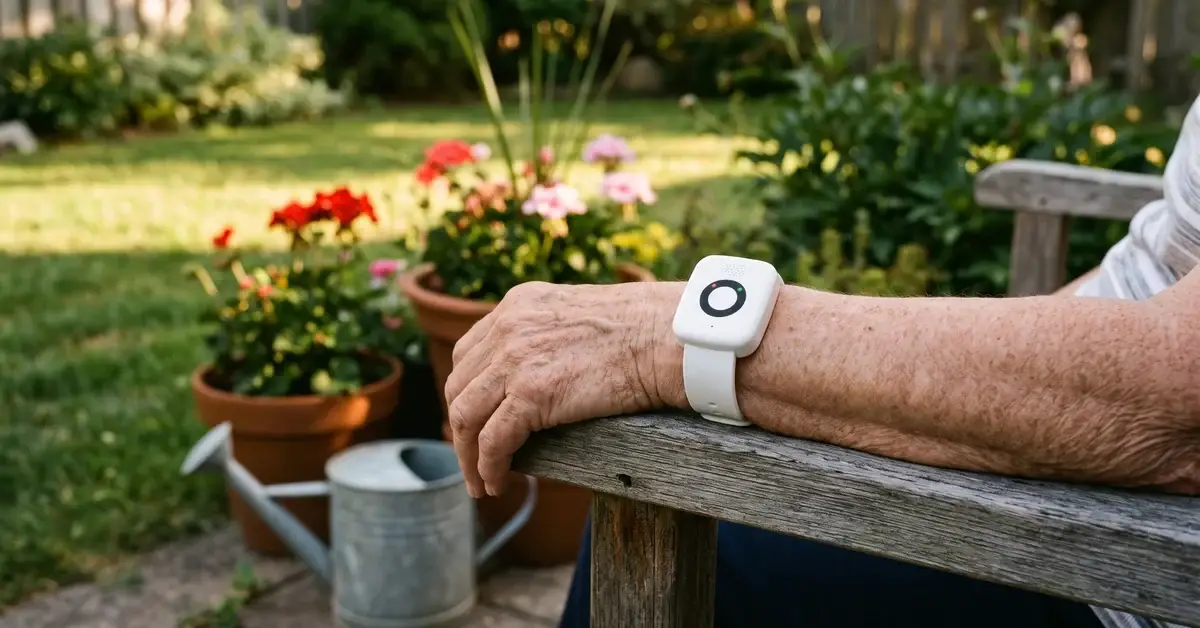
“Do you have a bracelet?” is one of the first questions on a lot of calls to Bedford, and it usually means one of three different things. Sometimes the caller wants a help button worn on the wrist instead of around the neck. Sometimes they are picturing the engraved bracelet a diabetic relative wears, the kind a paramedic reads. And sometimes they mean a watch.
This post sorts the three out, says plainly which of our devices go on the wrist and which do not, and ends with who tends to choose which form. It is written for the adult child doing the research and for the parent who has already decided a pendant is not for them.
Three things people mean by “medical alert bracelet”
A help button on a wristband. The same button that comes on a lanyard, worn on the wrist instead. Pressing it opens a call to a monitoring centre, where an operator answers and follows the response plan on file. This is what a monitored medical alert service means by bracelet.
A medical ID bracelet. An engraved bracelet or necklace that carries medical information for a responder to read: a condition, an allergy, a contact number. It does not call anyone. More on that below, because the two are often confused and they solve different problems.
A watch. A wrist-worn mobile medical alert with its own cellular connection, a help button and, on some models, fall detection and location. Our post on the medical alert watch in Canada covers that form on its own; here it is one of the three options.
Which Bedford devices go on the wrist
At Bedford Medical Alert®, the answer depends on which system you choose, so here it is device by device, as our product pages read today.
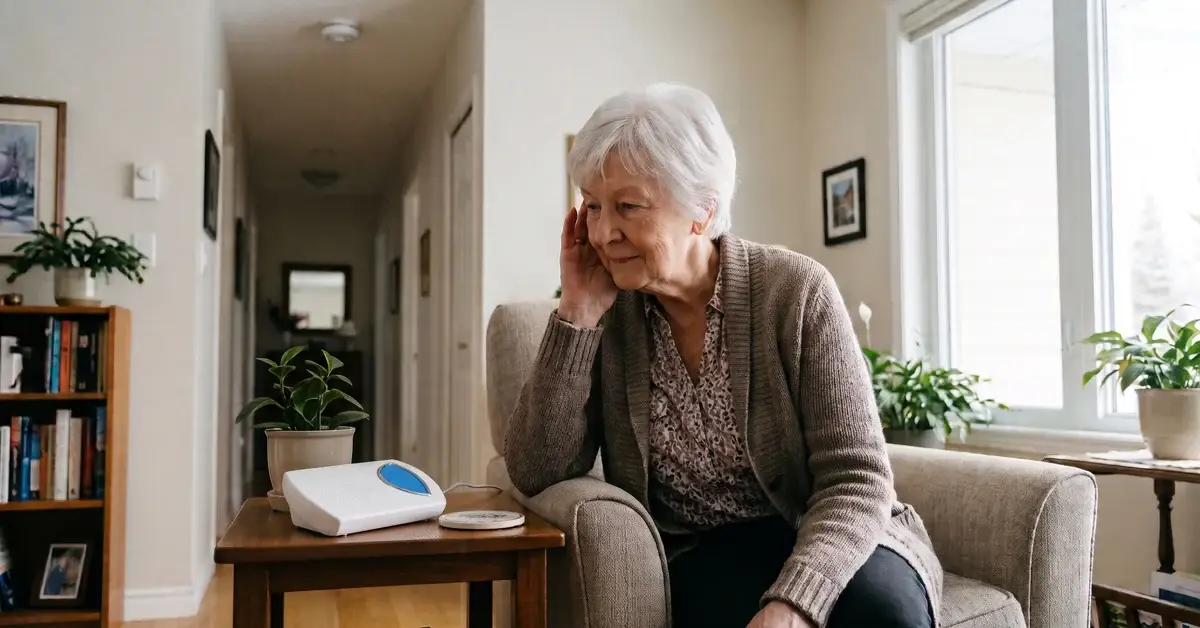
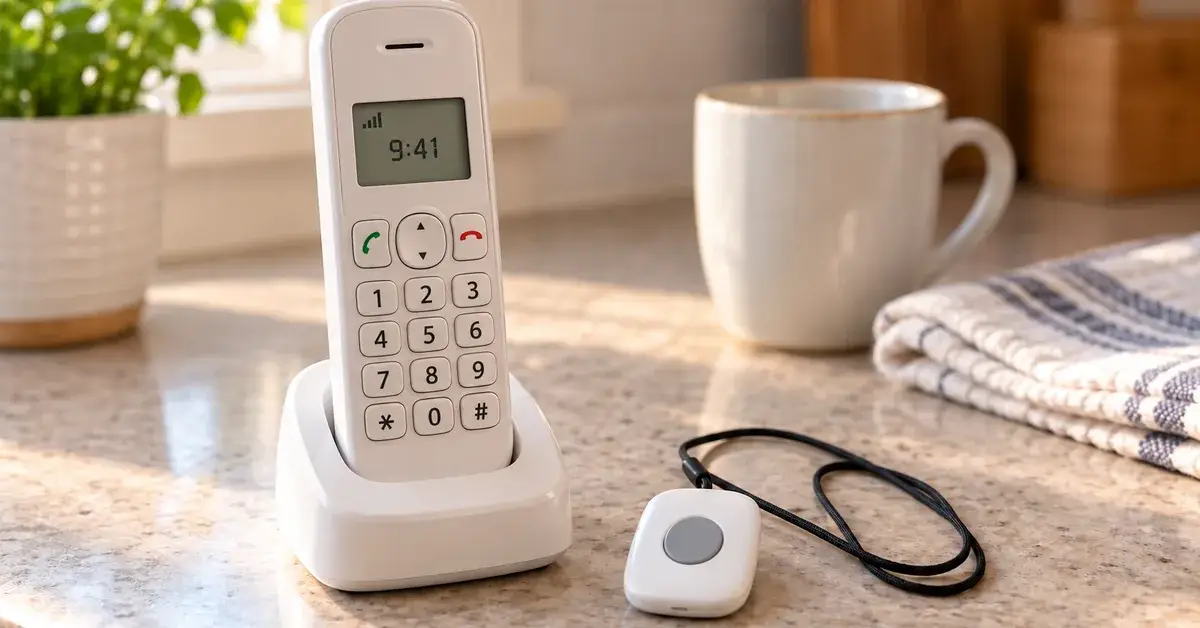
- Home Freedom, the in-home system. The help button is available as a pendant or a wristband, and both are completely waterproof. The wristband comes in Velcro or hypoallergenic silicone, in several colours, with black as the standard. The button works up to 800 feet from the base unit and its battery is rated for five years, so there is nothing to charge. This is the bracelet callers are usually asking about: a help button on the wrist, in the shower and the garden alike, for someone who is mostly at home.
- Home Freedom with fall detection. The fall detection pendant is worn around the neck. A wristband is not available for it, because the sensor needs to sit where it can read a fall properly.
- Go Anywhere Pendant, the mobile system. Worn around the neck, with an optional belt clip. A wristband is not available for the pendant.
- Go Anywhere Wrist. A wristband with its own LTE connection, GPS location, automatic fall detection sensors and a companion app for family. It is water-resistant and charges in a cradle; the battery runs up to two days with fall detection on and up to three days without. The wristband is included, and you can use your own.
- Bedford Smartwatch. A watch that combines a help button with fall detection, GPS and heart rate monitoring. Our post on smartwatches versus a dedicated medical alert watch explains where a consumer smartwatch falls short and where a dedicated one earns its place.
The short version: Home Freedom puts the button on the wrist at home; the Go Anywhere Wrist and the Smartwatch put it on the wrist everywhere; the two pendants stay on the neck. Everything on that list connects to the same 24/7 monitoring centre in Canada and the same response plan.
Not sure whether a wristband, a pendant or a watch is the right form for your parent? Call our care team at 1-888-755-3055 for a complimentary consultation by phone. Tell us whether they are mostly at home or out and about, whether they will charge a device, and whether a neck pendant has already ended up in a drawer, and we will say plainly which form fits.
Fall alert bracelets: fall detection on the wrist, in plain terms
Fall detection uses motion sensors to recognize the pattern of a fall and open a call without a button press. On our devices it is available on the Go Anywhere Wrist and the Smartwatch, and on the neck-worn Home Freedom and Go Anywhere pendants. It is a backup to the button, not a replacement for it: no sensor on the market catches every fall, and a person who can press the button should. Where a device sits on the body changes what its sensors see, which is why the in-home fall detection pendant is neck-worn only.
If fall detection is the reason you are shopping, our guide to emergency necklaces for seniors has a short, honest section on it, and the wearables post on wearable medical alert devices in Canada covers the wider comparison.
A medical ID bracelet is a different product
The engraved bracelet is the one many Canadians picture first, and it does a different job. A medical ID bracelet from an organization such as the MedicAlert Foundation Canada carries a person’s medical information where a responder can find it, and the organization runs a line responders can call for the fuller record. It does not summon help; it informs the help that arrives.
The two are not rivals. A parent with a drug allergy or a condition a paramedic should know about can wear an ID bracelet and a help button at the same time, and many do. At Bedford, the medical information a responder would want is also written into the response plan the operator works from, so it reaches the ambulance crew through the call as well.
If you only remember one line from this section: an ID bracelet speaks for you after help arrives; a help button is how help is called.
Who chooses which form
Families tend to sort themselves out along three questions.
- Mostly at home, or often out? At home, the Home Freedom wristband gives a waterproof button with nothing to charge. Out and about, the Go Anywhere Wrist or the Smartwatch carry their own cellular connection and GPS.
- Will the person charge a device? The Home Freedom button never needs charging. The Wrist and the Smartwatch do, on a routine of every couple of days. If charging will not happen, the in-home wristband or a pendant is the safer choice.
- Will they wear it? This is the one that decides most cases. A button in a drawer protects nobody. If a neck pendant has already been abandoned, the wrist is usually the form that stays on, and our post on who a wrist device suits goes into the reasons.
One more point for the Go Anywhere Pendant: it is not recommended for someone with a pacemaker, because of its built-in magnets; the belt clip and the wrist devices are the alternatives to raise on the call.
What stays the same whichever you pick
Whatever form the button takes, the service behind it is the same. Bedford is Canadian-owned and operated, with our monitoring centre based in Canada, and our operators follow a response plan written for your household rather than a generic script: the contacts you choose, in the order you want them called, and emergency services when the situation calls for it. We bring three generations of experience to Canadian homes.
Plans typically run month to month after a three-month minimum at the start, with optional six or twelve month initial terms if the savings suit you. Service reverts to month to month afterwards, and there are no cancellation fees. The equipment is included with the subscription, and the same subscription can move from one form to another as needs change, which is worth asking any provider about before you sign.
Nothing in this post is medical advice. Questions about a condition, a medication or whether an ID bracelet is warranted belong with your parent’s doctor or pharmacist.
For the wrist, our Go Anywhere page sets out the Go Anywhere Wrist and the Bedford Smartwatch side by side; for a waterproof wristband at home with nothing to charge, see the Home Freedom system. Call 1-888-755-3055 and tell us how your parent spends the day; we will match the form to the person.
Sources (read on 5 November 2026)
- Bedford Medical Alert, the Home Freedom, Go Anywhere and Smartwatch product pages linked above (device availability, wristband options, waterproofing, battery figures as published on the day of reading)
- MedicAlert Foundation Canada, “How We Work” (the engraved ID worn at pulse points; the 24/7 Emergency Hotline that first responders and 911 dispatch call): medicalert.ca