A phone call that sounds like a grandson in trouble. A text from “the bank” about a locked account. A voice claiming to be from a government office, insisting the matter is urgent and private. Fraud aimed at older Canadians is a large and well-documented problem, and the honest version of this page starts with what the official numbers say and ends with a plain account of where a medical alert fits, which is a smaller place than a sales page would like.
Bedford Medical Alert® has monitored Canadian seniors for three generations. We are not fraud investigators, and nothing here is financial or legal advice. What we can do is put the current figures in one place and be exact about what a help button can and cannot do when a scam call arrives.
What the Canadian Anti-Fraud Centre recorded in 2025
The Canadian Anti-Fraud Centre’s year-end summary, published 25 February 2026, counted more than 112,000 fraud reports in 2025 and more than $704 million in reported losses. Investment fraud was the largest category by dollars at roughly $351 million, followed by relationship fraud, job fraud and fraud-investigator impersonation. Identity fraud and phishing led by number of reports.
Two things about those figures matter for families. First, they are reported losses only. The Competition Bureau’s Fraud Prevention Month release of 6 March 2026 repeats the CAFC’s working estimate that only 5% to 10% of fraud is ever reported, so the true figure is much larger and nobody knows it precisely. Second, the same release names artificial intelligence as a new factor, saying it has given fraudsters tools to create highly convincing impersonations. We quote that rather than embellish it.
The scams that reach older adults at home
The emergency scam, often called the grandparent scam, is the one families describe to us most. The CAFC’s description is specific: the caller impersonates a grandchild, a family member, a lawyer or a police officer, says there has been an accident or an arrest, and asks for cash or cryptocurrency for bail, medical fees or repairs. Urgency and secrecy are the tools. Victims are told not to tell anyone, sometimes that a court order forbids it. A newer variation is the “broken phone” message, where a supposed relative texts from an unknown number and asks for money for a replacement.
Government and bank impersonation work the same way with a different costume: a call or text claiming to be from a tax office, a benefits program or a bank, demanding immediate payment or a transfer to a “safe account”. Legitimate organizations do not ask for payment in gift cards or cryptocurrency, and a real bank does not ask you to move money to protect it.
The CAFC’s advice is the same in every case, and it is worth repeating because it works: hang up, and call the family member or the organization back on a number you already have, never one the caller gives you. Urgency is the scam. A real emergency survives a ten-minute pause while you check.
If you are setting up monitoring for a parent and want to talk through who should be on the response plan, our phone consultation is complimentary and there is no obligation: 1-888-755-3055. We are Canadian-owned, and our monitoring is based in Canada and staffed 24/7.
Where a medical alert fits, and where it does not
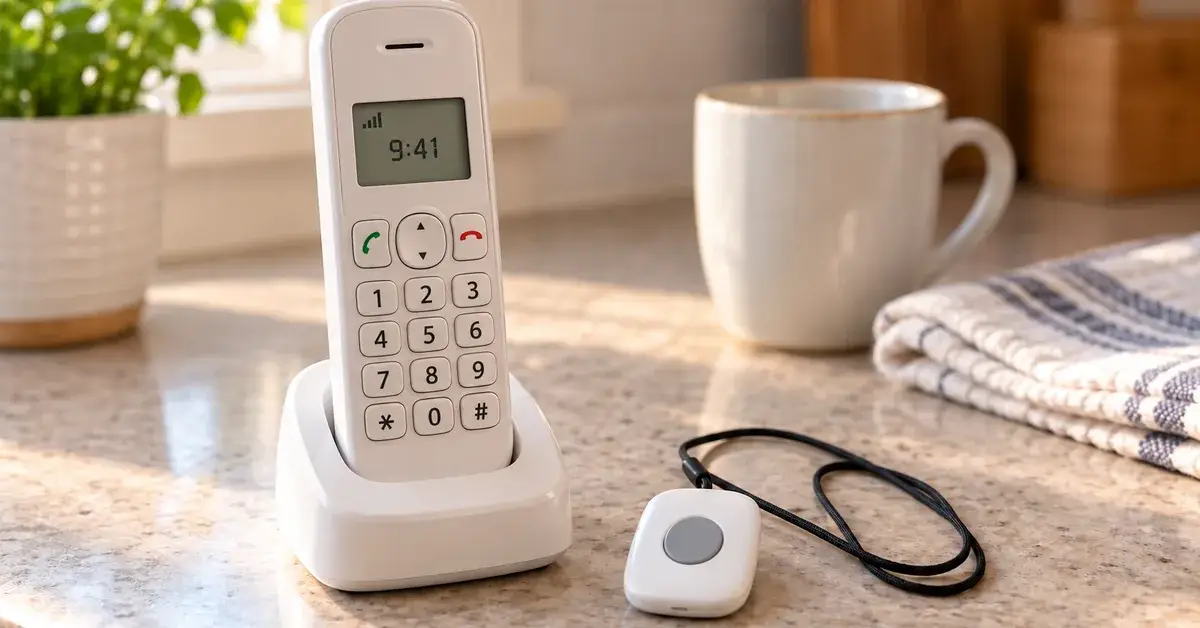
A monitored medical alert is built for one job: when the button is pressed, a trained operator in Canada answers around the clock and works from the personalized response plan the family set up, which names the people to call and in what order. That is the whole of its role in a scam, and it is a useful one. A person who has just taken a frightening call can press the button they already wear and have a familiar voice reach a trusted family member within minutes, before any money moves. For someone living alone, that is the “call someone you trust first” step made physical.
It is important to be equally clear about what the device does not do. It does not screen or block calls. It does not watch bank accounts, stop a transfer or recover money. Our operators are not police and do not verify callers or investigate fraud; what they do is reach the family contacts on the plan and, in a medical emergency, emergency services. Families who want fraud protection on the accounts themselves should speak to their bank about alerts, limits and trusted-contact arrangements. Our page on recognizing the signs of financial abuse covers the pattern where the pressure comes from someone close rather than a stranger on the phone.
Four things families can set up this week
Agree a family code word for any emergency call that asks for money, and make sure the grandchildren know it too. Write the bank’s real number and the family’s numbers on a card by the phone, so “call back on a number you already have” takes no effort. Tell the parent plainly that no one will ever be angry about a call that turns out to be nothing; the scam depends on embarrassment and silence. And decide who the first contact on the monitoring plan should be, because that is the person who will be reached when the button is pressed.
About the service behind the button
Bedford is Canadian-owned with monitoring based in Canada around the clock. Operators work from each person’s personalized response plan rather than a generic script. Equipment is included with the subscription and there are no long-term contracts. Plans typically run month to month after a three-month minimum at the start, with optional six or twelve month initial terms if the savings suit you. Service reverts to month to month afterwards, and there are no cancellation fees. We are a member of the Ontario Community Support Association, trusted by clinicians across Canada, and Canadian families have given us a 4.9-star Google rating.
Home Freedom is the in-home system, a wearable button paired with a base station. The Go Anywhere Pendant and Watch are mobile devices for people who are out and about. Why families choose Bedford sets out how the monitoring and the terms work, and our main page is the place to start if all of this is new.
If the person you are thinking of is mostly at home, Home Freedom pairs a wearable button with a base station and 24/7 Canadian monitoring, with equipment included and no long-term contract. Call 1-888-755-3055 and we will tell you plainly whether it suits the household, and who should be first on the plan.
Sources
- Canadian Anti-Fraud Centre, “Top 10 frauds in 2025,” 25 February 2026: antifraudcentre-centreantifraude.ca
- Canadian Anti-Fraud Centre, “Emergency scams,” page last modified 14 January 2026: antifraudcentre-centreantifraude.ca
- Competition Bureau Canada, “Fraud Prevention Month to bring hidden crime into the spotlight,” 6 March 2026: canada.ca