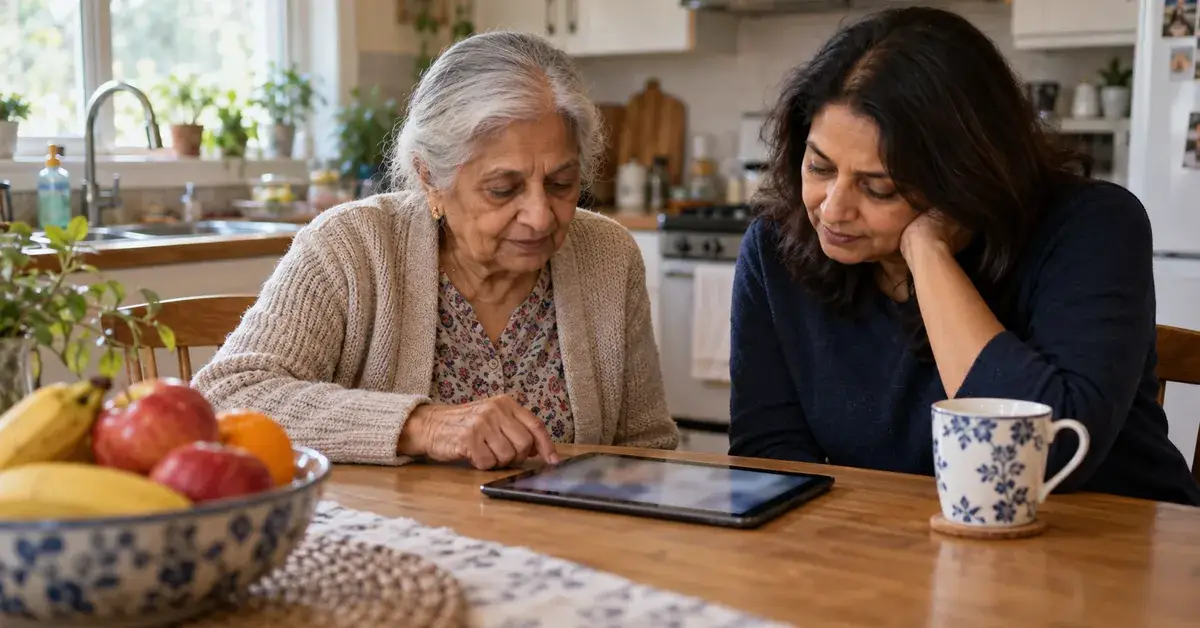
When a family sets up monitoring with us, the conversation is almost always with the adult children. They give us the address, the contact numbers, the notes about which door sticks and where the spare key lives. Somewhere in that house there is often a fifteen year old who set up the tablet, fixed the Wi-Fi twice, and knows the passcode. Nobody thinks to ask what that person could do.
That is a waste, and it is fixable in an afternoon.
Care runs in both directions
Statistics Canada’s 2017 General Social Survey counted 16.0 million Canadians aged 45 and over, and 7.5 million of them, 47.0%, were grandparents. The average grandparent was 68 years old, and first-time grandparents averaged 52.
Those grandparents are not only on the receiving end of family help. In the 2022 General Social Survey, one in five unpaid caregivers, 21%, said they had provided care to a grandchild in the previous twelve months, and the caregivers who looked after grandchildren and nobody else spent roughly 15 hours a week doing it.
Living arrangements have shifted too. The 2021 Census found that 553,855 children aged 0 to 14, close to one in ten, lived with at least one grandparent, up from 7% in 2001.
Those figures describe a lot of households where the grandparent has already spent years as the helper: the after-school pickup, the second set of hands, the one who was free on a Tuesday. Reversing some of that flow is not a demotion. It is a turn.
Why the teenagers get left out
Families sort safety jobs by seniority out of habit. The adults take the serious ones and the teenagers get asked to be polite at dinner.
There is a second reason, and it is more practical. Adults set up the service, so adults answer the questions. Bedford Medical Alert® operators work from a personalized response plan for each person rather than a single generic script, which means the setup conversation covers real detail: who to reach, in what order, what they need to be told. It is a conversation between grown-ups about grown-ups, and a teenager sitting at the same table hears none of it.
The result is that the family member with the most patience for a charging cable ends up with no assigned part in the one system the whole family is anxious about.
Three jobs a teenager will do better than you
The technology job
The obvious one, and the most useful.
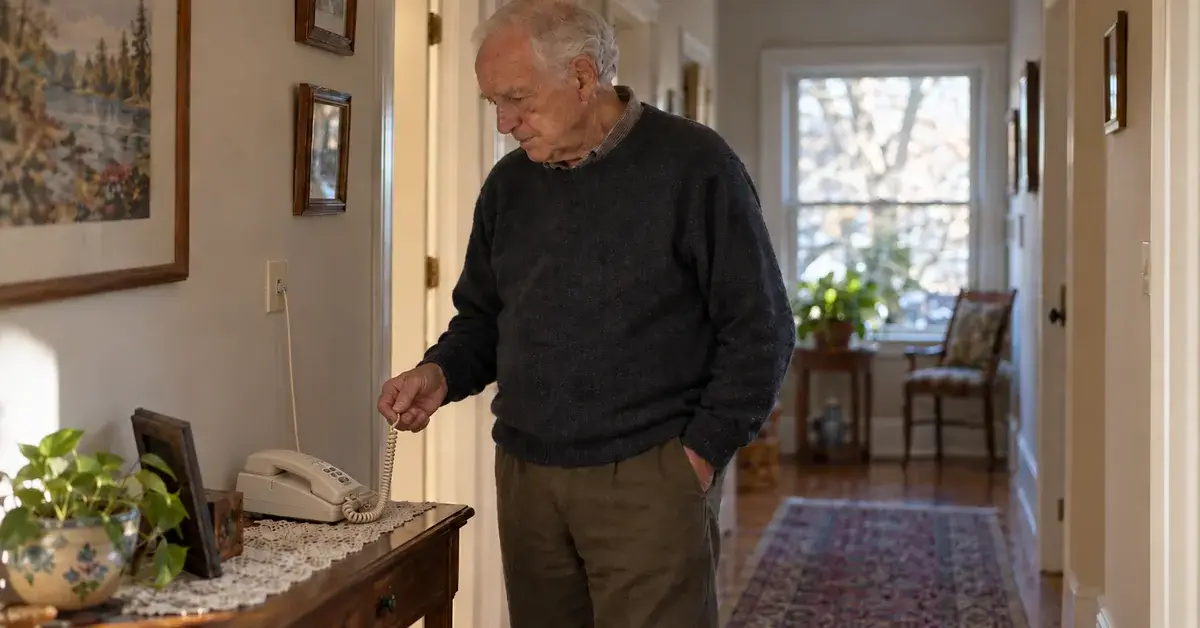
Pendants and wrist devices need charging or battery checks. Base units need to sit somewhere the speaker can actually be heard, not behind a photo frame on a bookshelf. A family app needs an account, a password somebody remembers, and notifications that are switched on. Our own setup is deliberately simple, Easy Setup is the phrase we use for it, and there is no separate device to buy.
Simple is still not the same as familiar. Handing the fifteen minute walkthrough to the person in the family who finds menus obvious is a better use of everyone’s afternoon.
The test-press job
Bedford recommends testing the device. Pressing a help button on purpose feels like crying wolf, though, so it tends not to happen without a nudge from somebody.
A teenager can strip the drama out of that completely. Turning a test into a normal part of a visit, with somebody standing right there, is worth more than any amount of reassurance about how the button works.
The keeping-it-current job
Contact details rot. Phone numbers change, people move, a daughter switches jobs and the number on file is a desk that nobody sits at any more.
Somebody has to notice. A teenager who visits regularly and is comfortable saying “that’s Mum’s old number” is a genuinely good candidate for the job of reading the list out loud once in a while and flagging what has gone stale. Check with your provider, Bedford included, how the contact list gets updated and who is allowed to do it.
Wondering how a device would actually fit your family’s routine? Our phone consultation is complimentary and there is no obligation at the end of it: 1-888-755-3055. We are Canadian-owned, our monitoring is based in Canada and staffed 24/7, and we are happy to walk through what a setup would look like in your parent’s or grandparent’s home, including who in the family would do what.
Where the line sits between helping and being on the call list
Here is where families should slow down. Being on a response plan is not the same as being helpful around the house. A named contact may be phoned at two in the morning, may need to get to the house, and may be asked to make a call about what happens next.
On a Bedford response plan, the named contacts are adults the person being monitored chooses. Teenagers are helpers in the plan, not contacts on it, and a teenager should never find out they were on a list by being phoned in the middle of the night. If you are comparing providers, ask each one directly who they will and will not list rather than assuming the answer.
The shape that works is a teenager who holds the practical jobs above while the adults hold the call list. That can change as they get older and as the family decides.
What not to hand a teenager
Not the medical decisions. Not the judgement call about whether something is serious.
And not the responsibility for whether help arrives. That belongs to the monitoring centre. Bedford’s operators are in Canada, on duty around the clock, working the personalized plan the family set up. A sixteen year old should never be the reason a call gets answered or missed.
Two more limits worth saying plainly. Automatic fall detection, on any brand’s device, works by sensing patterns of movement and impact, and no sensor on the market catches every fall, so nobody in the family, of any age, should treat a device as a guarantee. And a monitored device is a safety net under a family’s contact with each other. It is never a replacement for that contact.
The connection part already has a home
We have written separately about the health risks of loneliness and the benefits of social connection for seniors, so this piece will not re-run that ground. The part that belongs here is smaller and more obvious: a weekly video call a teenager actually makes is worth more than a monthly one an adult keeps meaning to.
If you are the primary caregiver and the load is the problem rather than the connection, how monitoring shares a caregiver’s load is the more useful read.
A plan a family can keep
The version of this that survives contact with a real family is small. One teenager, two or three jobs, written down, revisited when something changes.
The service underneath it should be equally low-friction. We are Canadian-owned with monitoring based in Canada around the clock, there are no long-term contracts, and the equipment is included with the subscription. Plans typically run month to month after a three-month minimum at the start, with optional six or twelve month initial terms if the savings suit you. Service reverts to month to month afterwards, and there are no cancellation fees.
A family handing a real job to a fifteen year old usually wants to know who the adults behind the button are. We are a member of the Ontario Community Support Association, we are trusted by clinicians across Canada, and we have supported hospital education programs and research initiatives from UHN Toronto Rehab to Trillium Health. Three generations of experience sit behind the company, and Canadian families have given us a 4.9-star Google rating.
Our five streams fit different lives: Home Freedom for an in-home pendant and base unit, the Go Anywhere Pendant and Go Anywhere Watch for people who are out and about with mobile GPS, Silver Shield for non-wearable radar fall detection where a wearable will not be worn, and our institutional and nurse call systems. Why families choose Bedford works through that comparison in more detail, and our main page is the place to start if all of this is new.
Give the teenager a job. They will probably be better at it than you are, and the grandparent gets a visitor with a reason to come by.
If the grandparent in your family is mostly at home, Home Freedom is the place to look first: an in-home pendant with a base unit, equipment included with the subscription, Easy Setup, and 24/7 monitoring from Canada with no long-term contract. Call 1-888-755-3055 to talk it through, and bring the tech-savvy grandchild to the setup.
Sources
- Statistics Canada, “Grandparents’ Day, by the numbers,” StatsCAN Plus, 8 September 2023 (grandparent counts and average ages from the 2017 General Social Survey; grandchild-care figures from the 2022 General Social Survey): statcan.gc.ca
- Statistics Canada, “Home alone: More persons living solo than ever before, but roomies the fastest growing household type,” The Daily, 13 July 2022 (2021 Census figures on children living with a grandparent): www150.statcan.gc.ca