Picture a call from the monitoring centre’s side. A button is pressed somewhere in Canada, the base unit in that kitchen opens a line, and the operator says hello. Nothing comes back.
Maybe the person is on the floor and cannot answer. Maybe they answered, and the operator could not make out the words. Or maybe they are standing two rooms away, perfectly fine, and never heard the base unit speak at all.
Hearing loss can sit behind any one of them. This post is for adult children whose parent lives alone and is turning the TV up a little louder each visit, and for older adults who have started missing the doorbell. It covers what hearing loss changes in a home with one person in it, and the setup choices that keep help within reach.
How common hearing loss is after 60
Statistics Canada did not rely on what people said about their own hearing. It tested them. In the Canadian Health Measures Survey, cycles 3 and 4 (2012 to 2015), hearing was measured at the speech frequencies, and 77.6% of adults aged 60 to 79 had at least slight hearing loss in one or both ears (Statistics Canada, “Hearing loss of Canadians, 2012 to 2015”, released October 13, 2016).
The second number in that release matters more for a family. Among people aged 60 to 79 with measured hearing loss, 73.2% said no health professional had ever diagnosed them with a hearing problem (same release, Chart 3).
So in many homes, nobody has put a name to it yet. The person is not hiding anything. Gradual loss is easy to explain away: people mumble, the restaurant was loud, the phone line was bad.
A note on that source: StatCan has archived the page, and the figures are from survey years ending in 2015. They are still the most recent measured national figures we could find.
Four sounds a person living alone depends on
When two people share a house, one of them usually hears the kettle, the knock or the alarm. Living alone removes that backup. These are the four we think about first.
The phone. A daughter calls at the usual time and it rings out. Then again. By the third try she is in the car. Missed calls from family are often the first sign anyone notices, and the worry they cause is real on both ends. Agreeing on a text message check-in, or a set call time when the phone is nearby, takes some of the guesswork out.
The door. A missed doorbell is an inconvenience for a parcel. It is a bigger problem when it is a home care worker, a pharmacy delivery or a neighbour checking in after a storm. Flashing doorbell signallers are sold for exactly this, and they are worth a look.
The smoke alarm. This one is not optional. A 2021 safety tip sheet from the National Fire Protection Association, distributed by the City of Hamilton, notes that alarms producing a lower-pitched sound can wake sleeping people with mild to severe hearing loss more effectively, that strobe lights can alert people who are awake, and that a bed or pillow shaker that responds to the smoke alarm can wake someone who is asleep. It also says to test alarms at least once a month using the test button (NFPA tip sheet via hamilton.ca). Your local fire department is the right call for questions about what fits your parent’s home.
The voice on the help line. This is the one families do not think of until it matters, and it is where a medical alert setup can be adjusted.
Where hearing changes a medical alert setup
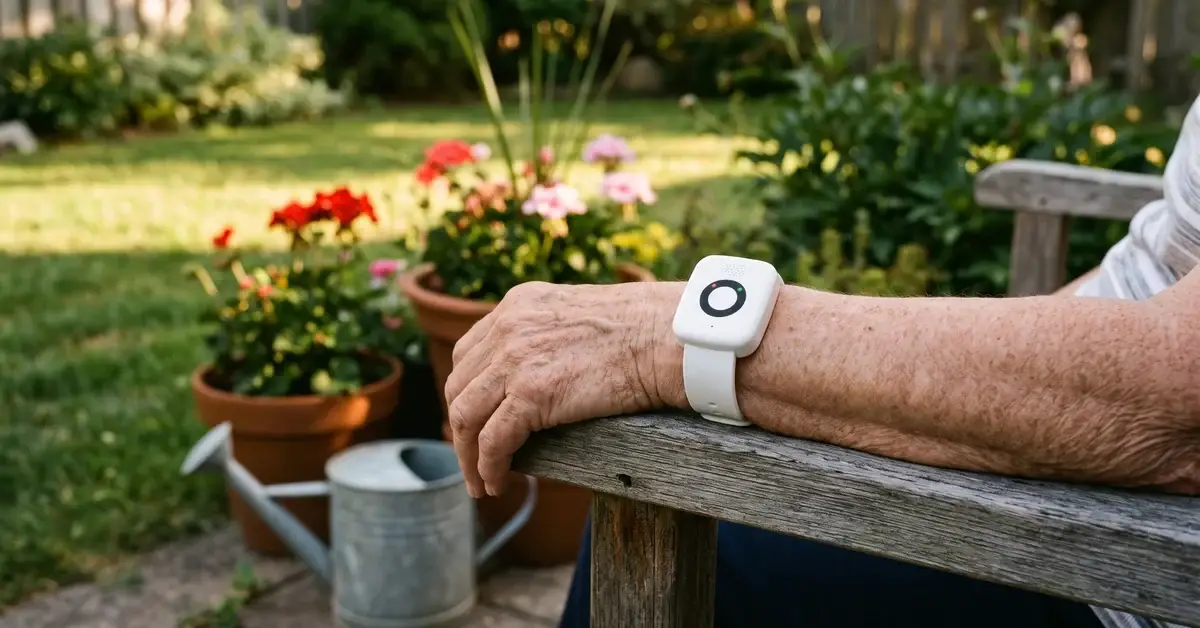
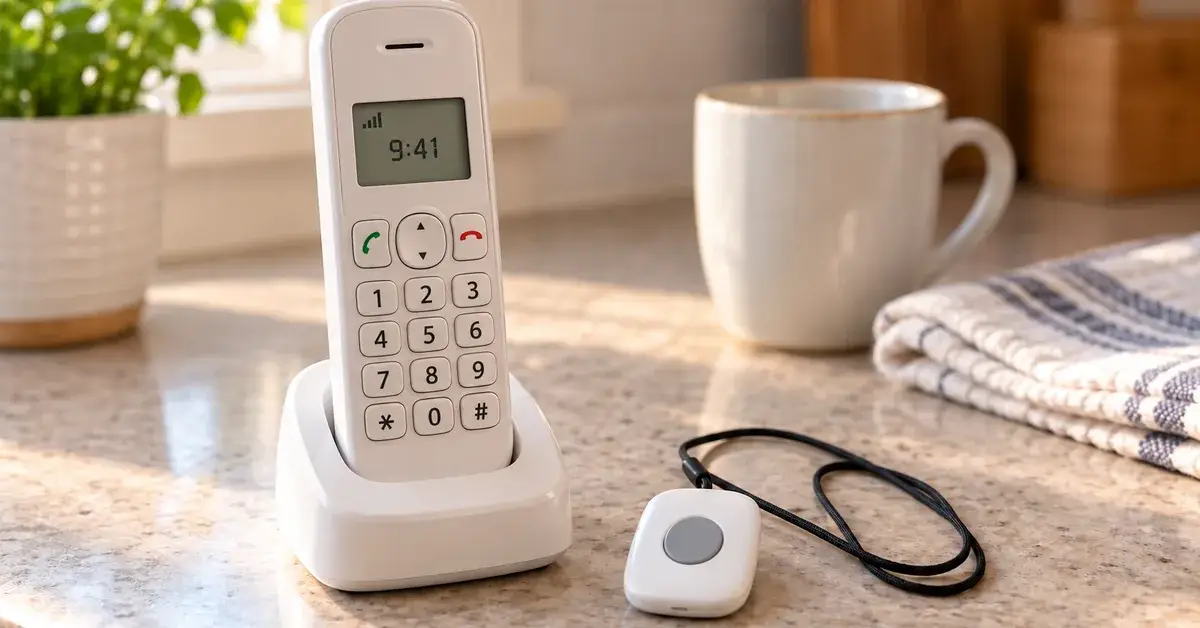
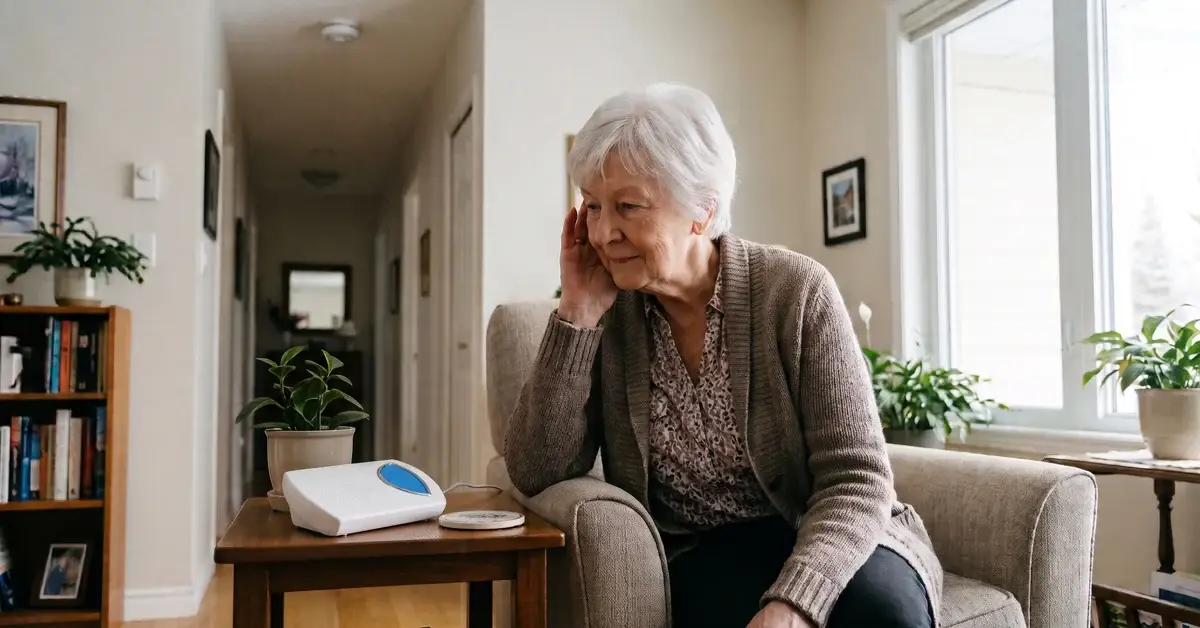
At Bedford Medical Alert®, our Home Freedom system works through a base unit with a two-way voice speaker. When the button is pressed, the base connects to our 24/7 monitoring centre in Canada, and the conversation happens through that speaker. The wireless button itself works up to 800 feet from the base.
That range is useful in a garden or a basement laundry room. It also means the button can reach the base from places where your voice and your ears cannot. Someone pressing the button from the far end of the yard has called for help. Hearing the operator’s reply is another matter.
Two adjustments are available on our devices for people with hearing loss:
- Loud volume settings, so the operator’s voice through the base is easier to hear.
- Indicator status lights, so the equipment’s status can be checked by looking instead of listening for a chime.
Those two are the accommodations we can state plainly, and we cover them with the rest of the range on our accessible medical alert devices page, along with the matching setup for low vision and arthritis.
Setting up a medical alert for a parent who is hard of hearing? Call our care team at 1-888-755-3055 for a complimentary consultation by phone. Tell us about the hearing loss, the layout of the home and who lives nearby, and we will walk through the volume settings, where the base unit should sit and how the response plan can be written for a quiet call.
Where to put the base unit
Placement does more for a hard-of-hearing household than any setting. A few things to check on the first visit after setup:
- Put the base in the room where your parent spends the most waking hours, not the room with the most convenient outlet.
- Keep it away from the TV, the range hood fan and the dishwasher. Background noise competes with the operator’s voice.
- Walk to the bedroom, the bathroom and the back door, press the button for a test call and listen from each spot. Where the voice drops away, you have found the gap.
- If the home has two floors and your parent sleeps upstairs, raise that on the setup call so the plan fits the house as it really is.
Testing like this takes ten minutes. Our page on how to test a medical alert system covers the routine in more detail.
What happens when the call is quiet
Families sometimes worry that if their parent cannot hear the operator or answer clearly, the call is wasted. It is not.
If the person cannot answer, the operator does not assume it was a false alarm. They follow a set procedure for a silent or unclear call, and the response plan you built with us takes over: the contacts you chose, in the order you want them called, and emergency services when the situation calls for it. Our page on what happens when you press a medical alert button walks through that sequence step by step.
Hearing loss belongs in that plan. Tell us on the setup call that your parent is hard of hearing, whether they wear hearing aids at night and how they prefer to be reached. That goes in your file, alongside the contacts and medical information the operator works from, so it is known before the call ever happens.
Talking about it without making it a verdict
Hearing loss can be a touchy subject, especially for a parent who has managed alone for years. A few approaches tend to go better than “you can’t hear anything anymore”:
- Start with a specific moment, not a general judgment. “I called three times on Sunday and got worried” lands differently than a comment about the TV volume.
- Put the smoke alarm first. It is a safety fix almost nobody argues with, and it opens the door to the rest.
- Leave hearing tests to the professionals. Your parent’s family doctor can talk about a referral; that conversation belongs to them, not to a blog post.
Living alone is common among Canadian seniors, and our page on how many Canadian seniors live alone sets out the census figures.
Nothing in this post is medical advice. Questions about your parent’s hearing, hearing aids or a hearing test belong with their family doctor or an audiologist.
What we ask on the setup call
Bedford brings three generations of experience to Canadian homes, and we are Canadian-owned and operated, with our monitoring centre based in Canada. When a family tells us hearing is part of the picture, these are the questions we work through with them:
- Which room does your parent spend the day in, and where do they sleep?
- Do they use the phone, a text message or neither for daily check-ins?
- Would loud volume and indicator status lights help, and who will check the lights?
- Who should the operator call first if a call is quiet?
There is no long-term contract to weigh while you decide. Plans typically run month to month after a three-month minimum at the start, with optional six or twelve month initial terms if the savings suit you. Service reverts to month to month afterwards, and there are no cancellation fees. The equipment is included with the subscription.
Our Home Freedom system pairs a waterproof help button with a two-way voice base unit, with loud volume settings and indicator status lights available. It connects through a landline or VoIP, or through LTE if there is no wired line, and has a battery backup. Call 1-888-755-3055 to talk it through with our care team, or visit the Home Freedom page to see how it works.
Sources (read on 3 November 2026)
- Statistics Canada, Health Fact Sheets 82-625-X, “Hearing loss of Canadians, 2012 to 2015”, released October 13, 2016 (archived page; Canadian Health Measures Survey cycles 3 and 4; Chart 1 and Chart 3 data tables): statcan.gc.ca
- National Fire Protection Association, “Smoke and CO Alarms for People who are Deaf or Hard of Hearing” safety tip sheet (2021), distributed by the City of Hamilton: hamilton.ca
- Bedford Medical Alert, the Home Freedom, accessible medical alert devices, and what happens when you press a medical alert button pages linked above