Canadians rewrote their travel habits in 2025. Statistics Canada’s monthly travel releases tracked car trips home from the United States running 30 to 40 percent below year-earlier levels for much of the year, while overseas trips kept climbing. That shift shows up in real plans: more cottage weekends and cross-country family visits, while the winter south got shorter or was skipped altogether. For anyone who wears a medical alert, every one of those plans raises the same practical question. Does the protection come along?
At Bedford Medical Alert®, we hear that question ahead of every long weekend. The answer depends on which device you own and where you are going, so this guide walks through the trips Canadian families actually take: the cottage, the cross-country visit, and the winter in the United States. We are Canadian owned and operated, and the monitoring centre that answers is in Canada. The equipment comes with the subscription rather than as a separate purchase.
First, know which device family you own
Everything below turns on one distinction.
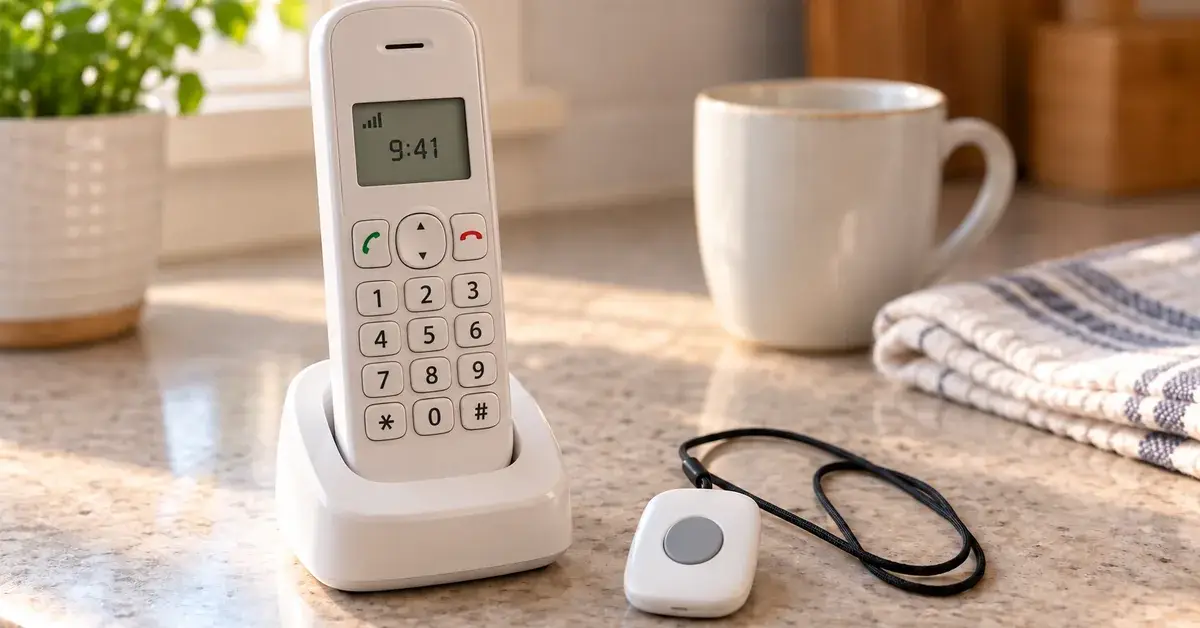
An in-home system, like our Home Freedom service, pairs a base unit with a waterproof help button. It is set up for the home it protects, and that is its job: reliable coverage in the place where you spend the most hours.
A mobile system travels. The Go Anywhere Pendant and the Go Anywhere Watch connect over cellular networks and carry GPS, so they work away from your address, anywhere in Canada with cellular coverage. If you are not certain which family your device belongs to, call us and ask. It takes a minute and it changes every answer that follows.
The cottage: the classic Canadian test
A base unit is installed for the home it protects, so the right way to cover a lake week is a mobile device, not a base unit riding in the back seat. Before moving any equipment, talk to us first.
The complication at the cottage is signal. The Canadian Telecommunications Association reports that LTE networks reached 99.5 percent of Canadians as of the end of 2024, a figure echoed in the CRTC’s market reporting, but that number measures population, not geography. People cluster in cities; lakes do not. The drive from Hamilton up to a Muskoka or Kawartha lake passes through coverage that changes township by township, and the last stretch of gravel road can sit in a gap even when the town ten minutes away has full bars.
So ask us about your specific lake before you go. Coverage varies by carrier and by shoreline, and it is far better to know on Tuesday in your kitchen than on Saturday on the dock. And if the lake is where you spend half the year, say so when we talk: a seasonal rhythm belongs in a response plan.
Across Canada: what actually travels with you
Take the trip. This is the part of the job we like: a mobile device is built so that a visit to grandchildren in Calgary or a month in Kelowna does not mean a month unprotected.
Two things ride along with the hardware. The first is the network: the device works wherever there is cellular coverage in Canada, which covers the overwhelming share of places people actually stay. The second matters more and gets noticed less: your personalized response plan travels too. If you press the button in British Columbia, the same Canadian monitoring centre answers, the operator reads the same response plan, medical notes included, and the device can share its location. Our explainer on how GPS medical alert devices locate you covers what the operator can see and how.
Automatic fall detection is available on our mobile devices and is designed to call out for help when a fall is detected. No sensor on the market catches every fall, which is why the button you can press remains the heart of the service.
A longer stay works the same way as a short one, and if a visit is quietly turning into a move, call us about the address change. Response plans are written around a household, and they should move when the household does.
One more step worth taking: tell the monitoring centre about a long trip. Response plans list the people we call, and the neighbour who holds a key matters less while you are three provinces away.
Planning a trip and not sure your device fits it? Call our Canadian team at 1-888-755-3055 before you pack. We will tell you exactly what works at the lake, on the road, and near the border, with Easy Setup and no long-term contract.
The snowbird question, answered plainly
Here is the straight answer, because you deserve it before you book anything: Bedford devices are not for use in the United States.
They are, however, designed to work near the border. Living in Niagara or Windsor is not a limitation, and the device does not weaken because Detroit sits across the river. The same holds for border towns from New Brunswick to the Lower Mainland. Near the border is fine. Across it is not what the service is built for. The same country of use rule at home in a border city is covered on our medical alert systems in Windsor page.
What should a snowbird household do with that? Call us before you go. We will walk through what your travel dates mean for your service, without a sales script. And it is worth saying that the arithmetic of a snowbird year still favours protection: a household that winters away for four months is home in Canada for the other eight, from icy driveways through spring yard work. The 2025 numbers suggest more of those winters are being spent here, shorter, or closer to home, which makes the Canadian side of the plan the bigger share of the year for many families.
A pre-trip routine that takes ten minutes
Pack the charging cradle the same evening you pack your medication. A mobile device that spends the trip in a drawer, uncharged, protects nobody.
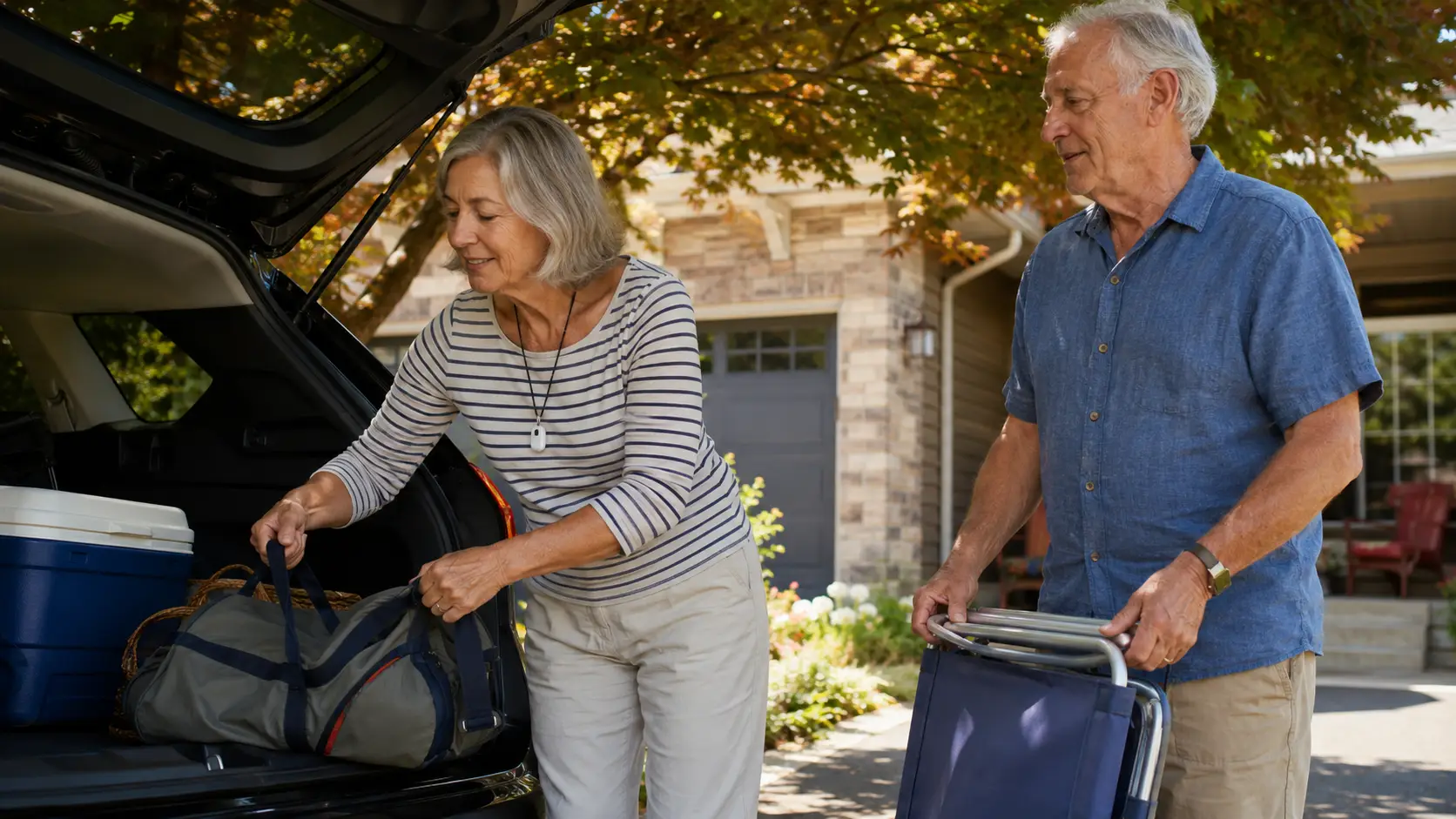
Wear the device on travel day. The drive itself, the rest stops, the unfamiliar stairs at the motel in Sudbury: that is exactly the territory a mobile system exists for. The day you travel is not the day to seal the pendant in a suitcase.
And make the two calls: one to us about coverage where you are headed, one to the family members on your response plan so they know your dates. Ten minutes, both of them.
Where home fits back in
Travel is the exception, and the system should fit the rule. If most of your year happens at home, an in-home system carries the load and a mobile device covers the rest; some households run one, some run both. The right mix depends on how you actually live. We are an OCSA member, trusted by clinicians across Canada, and rated 4.9 stars by Canadian families, and the plans typically run month-to-month after a three-month minimum at the start, with no long-term contract. If this year’s plan looks different from last year’s, those terms mean the service can change with it, and there are no cancellation fees standing in the way.
This post covers the senior who travels. For the adult child who lives far away year-round, see long distance caregiving in Canada.
Wherever the summer takes you, the button should go too.
The Go Anywhere Watch puts GPS and a help button on your wrist, monitored 24/7 from Canada, with the equipment included. Call 1-888-755-3055 and we will help you match a device to your travel plans. Recommended by doctors and hospitals.